Blepharoplasty, commonly known as eyelid surgery, is a transformative procedure that addresses drooping eyelids, puffiness, and the tired appearance caused by ageing or genetics. When the excess skin, muscle, and fat are removed or repositioned, it refreshes your appearance and, in many cases, improves your field of vision.
As we age, the delicate skin around the eyes loses elasticity, muscles weaken, and fat deposits shift, leading to hooding on top or bags underneath.
Because these are structural changes, eye creams and serums cannot fix them. Blepharoplasty is the gold standard for restoring a fresh, alert look. It doesn’t change your identity; it simply reveals a more rested version of yourself.
In this blog, you’ll learn all about blepharoplasty, its benefits, procedure, recovery, and more.
What is Blepharoplasty Surgery?
In simple terms, blepharoplasty is an eyelid surgery that changes the shape of your eyelids. Although many people want it to look younger, it actually works by removing and moving tissue.
The doctor gently removes excess skin that has become too loose, corrects or moves the small pads of fat that cause bags, and sometimes makes the eye muscles firmer.
By smoothing the areas around your eyes, the procedure brings back a fresh and lively look while keeping your eyes the main feature.
What are the Types of Eyelid Surgery?
Not all eyes require the same approach. Depending on your anatomy and goals, your surgeon will recommend one of the following:
Upper Blepharoplasty
Upper Blephroplasty focuses on the top eyelid. If you have heavy skin sitting on your lashes or obscuring your eyelid crease, this is the solution.
- The Technique: An incision is made within the natural fold of the lid.
- The Result: Excess skin is removed, and the scar remains hidden in the crease when your eyes are open.
Lower Blepharoplasty
Targets the area beneath the eye to eliminate bags.
- The Technique: Fat is either removed or repositioned to fill hollow spots (tear troughs).
Incision Options:

- Subciliary (Outside): Just below the lashes; ideal if loose skin is also to be trimmed.
- Transconjunctival (Inside): It is done from the inside of the eyelid, so there are no visible external scars. This technique is perfect for patients primarily concerned with fat bags.
Asian Blepharoplasty (Double Eyelid Surgery)
A specialised procedure for patients without a natural eyelid crease. It creates a defined fold, making the eyes appear more open and facilitating easier makeup application.
What are the Benefits of Blepharoplasty?
Why choose surgery? The advantages of blepharoplasty extend far beyond simple vanity; they address the structural health and day-to-day comfort of the patient.
Cosmetic Benefits of Eyelid Surgery
Youthful Radiance
This procedure eliminates the heavy hood of skin that can make the eyes look small and recessed. By creating a smoother, more defined eyelid, the face appears brighter, more vibrant, and naturally younger.
Alertness
Under-eye bags and deep tear troughs create persistent shadows that mimic the look of exhaustion. When the fat is removed or repositioned, it restores a flat, smooth transition between the eye and the cheek, ensuring you look as awake as you feel.
Improved Makeup Application
For many women, sagging skin hides the eyelid entirely, making it impossible to apply eyeshadow or eyeliner effectively. Surgery restores the visible canvas of the eyelid, allowing for smoother application and preventing makeup from smudging or disappearing into skin folds.
Functional Benefits of Eyelid Surgery
Expanded Field of Vision
When upper eyelids become severely lax, they can sag over the eyelashes and physically block the upper and side (peripheral) fields of vision. Lifting this curtain of skin literally opens up the world, making activities like driving and reading significantly safer and easier.
Reduced Brow Fatigue
Patients with heavy lids often spend their entire day subconsciously straining their forehead muscles to keep their eyes open. This constant muscle contraction leads to brow ache, forehead wrinkling, and tension headaches. By lightening the load on the eyelids, this chronic strain is finally relieved.
Are You a Suitable Candidate for Blepharoplasty?
You are likely a good candidate if:
- You are in good general health and a non-smoker (smoking significantly hinders healing).
- You have set realistic expectations for results rather than perfection.
- You struggle with heavy lids, excess skin, or prominent eye bags.
You may NOT be a candidate if:
- Severe Dry Eyes: Surgery can exacerbate chronic dryness.
- Thyroid Eye Disease: The condition must be fully stable before surgery is considered.
- Unrealistic Goals: Surgery improves your features, but does not stop the biological ageing process entirely.
Is Blepharoplasty Safe?
Yes, eyelid surgery is widely considered a safe and very common procedure. Most patients find it highly effective for refreshing their look. However, like any surgery, it is important to be aware of the standard risks.
While complications are not common, you may experience some temporary side effects such as bruising, swelling, or dry eyes during your recovery. More serious issues, such as infection or changes in vision, are extremely rare. The best way to stay safe and achieve the best results is to ensure your surgery is performed by a highly experienced, qualified surgeon.
Blepharoplasty vs Non-Surgical Options
| Feature | Surgical Blepharoplasty | Non-Surgical (Laser/Plasma) |
| Best For | Significant sagging and fat bags. | Fine lines and very mild skin laxity. |
| Durability | Long-lasting (5-10 years or permanent). | Short-term; requires repeat treatments. |
| Capability | Can remove fat and significant skin. | Cannot remove fat; minimal skin tightening. |
| Downtime | 1-2 weeks. | 2-5 days. |
What to Expect During a Blepharoplasty Procedure?
Blepharoplasty is a streamlined day-case procedure, meaning you arrive and return home within the same day. Here is a breakdown of the typical surgical experience:
Anaesthetic & Comfort
Most procedures are performed under local anaesthetic, where the area around the eyes is thoroughly numbed so you feel no pain. For those who feel anxious about being awake, surgeons often provide IV Sedation (Twilight Sedation). This keeps you in a deeply relaxed, dreamlike state where you remain conscious and able to follow instructions but likely won’t remember the details of the surgery afterwards.
Surgical Precision
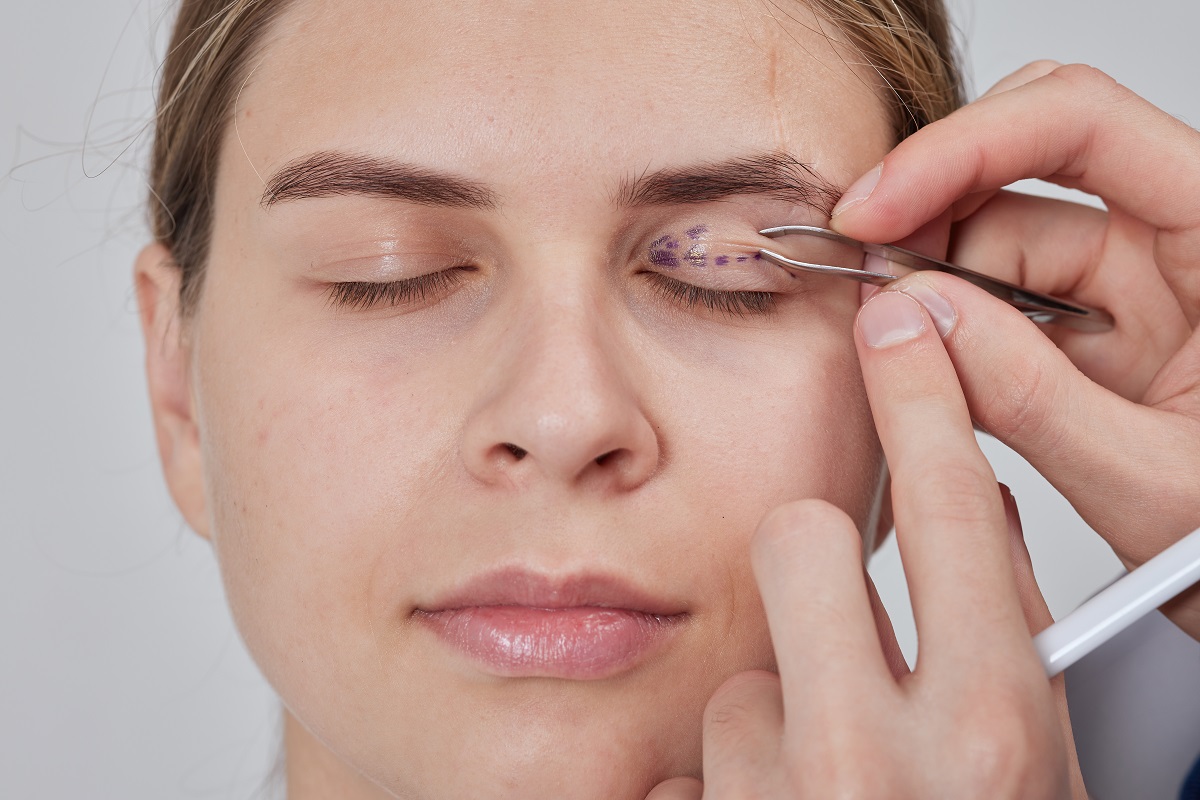
Once you are comfortable, your surgeon will use a specialised surgical pen to carefully mark the excess skin and fat to be addressed. These markings are vital for ensuring perfect symmetry and natural-looking contours. The incisions are then made along these precise lines to ensure any future scarring is beautifully integrated into your natural eyelid folds.
Procedure Duration
The time duration of the surgery depends on the complexity of your needs. An isolated upper blepharoplasty typically takes about 45 minutes, while a more intricate lower blepharoplasty (involving fat repositioning) takes roughly 1 hour. If you are having both procedures performed together, you should expect to be in the operating room for approximately 2 hours.
Post-Operative Discharge
Following the surgery, you will spend a short period in a recovery area where nursing staff will monitor your initial healing and apply cold compresses. Since your vision may be slightly blurry from protective eye ointment and the effects of sedation, you must arrange for someone who will drive you home and stay with you for the first 24 hours.
How Recovery Happens After Eyelid Surgery?
Here’s what to expect while your eyes heal after blepharoplasty
Days 1-3: Management
- Swelling & Bruising: This is at its peak during the first 72 hours.
- The Peas Rule: Apply cold compresses (or frozen peas wrapped in a clean cloth) for 10 minutes every hour while awake.
- Head Elevation: Sleep with your head elevated on two pillows to reduce fluid buildup.
Week 1: Initial Healing
- Stitches: Usually removed between days 5 and 7.
- Sensation: Eyes may feel tight or watery. Use prescribed ointments and avoid contact lenses.
Week 2: Returning to Routine
- Work: Most patients feel comfortable returning to desk work.
- Concealer: Makeup can now be used to mask any lingering yellowish bruising.
- Exercise: Light walking is encouraged; avoid heavy lifting, gym sessions, or bending over (which increases intraocular pressure).
Long-Term Outlook
- Upper Eyelids: Results typically last 5 to 7 years. While the skin continues to age, you will always look more refreshed than if you hadn’t had the procedure.
- Lower Eyelids: Results are almost always permanent. Once the fat pads are removed, they generally do not return.
How Long Does Blepharoplasty Last?
The longevity of the results of eyelid surgery depends on which surgery you have.
- Upper Eyelids: The results last about 5 to 7 years. Sometimes longer. Gravity keeps working. Your skin will age. But your eyes will always look better than if you never had surgery.
- Lower Eyelids: These results are often permanent. Once we remove the fat bag, it is gone. It does not grow back. You might get new wrinkles later. But the big puffiness usually stays away forever.
What Is the Best Age for Blepharoplasty?
There is no perfect age. Most patients are 35 or older. This is when skin starts to sag. This is when muscles get weak.
Exceptions: Some young people also need it. If your parents have eye bags, you might have them too. You might be 20 years old. Diet and sleep cannot fix genetic bags. Surgery is the only way. Older patients (over 60) often need it to see better.
How Much Does Eyelid Surgery Cost?
Here are typical UK prices for eyelid surgery:
- Upper Blepharoplasty: £3,000 – £4,500
- Lower Blepharoplasty: £4,000 – £6,000
- Combined Procedure: £6,000 – £8,000+
Note: The NHS rarely covers this unless a visual field test proves the skin significantly obstructs your sight.
What are the Downsides of Eyelid Surgery?
As with any surgical procedure, there are potential side effects and risks to consider when it comes to upper or lower eyelid surgery. Here is what you may expect:
Common Side Effects
These include temporary dry eyes, blurred vision (often due to protective ointments), and temporary asymmetry, as the two sides of the face heal at different rates.
Rare Complications
- Ectropion: A condition where the lower lid pulls away or turns outward from the eye.
- Lagophthalmos: Difficulty closing the eye fully, which usually resolves once the initial swelling subsides.
Importance of Choosing The Right Practitioner for Eyelid Surgery
The area around the eyes is sensitive, and achieving a natural result requires a high level of anatomical expertise. That is why selecting the right professional is the most critical step in your surgical journey.
Here’s what to consider when you choose a doctor:
- Oculoplastic Specialisation: Look for a surgeon who specialises in oculoplastic surgery or facial plastic surgery. These practitioners have specific training in the complex structures surrounding the eyes.
- Check Credentials: Make sure that your chosen surgeon is on the GMC Specialist Register and holds the appropriate fellowship (such as FRCS).
- Safety First: Always confirm that the clinic has its Care Quality Commission (CQC) registration in England or equivalent bodies in other regions. This ensures the facility meets strict safety and hygiene standards.
- Review Results: A reputable practitioner will be happy to show you aligns with your goals.
Final Thoughts on Eyelid Surgery
Blepharoplasty is a safe and effective surgical procedure that refreshes the eye area by removing excess tissue and contouring the eyelids. It is one of the most rewarding procedures in plastic surgery because it offers a high impact with relatively low downtime. While upper eyelid results typically last from 5 to 7 years, lower eyelid results are often permanent, helping you maintain a rested appearance for the long term.
If you’re tired of looking tired, it may be time to see what’s possible. Contact our expert at Dr Tanov Eye & Aesthetics today to schedule a consultation with our specialist surgeons.