
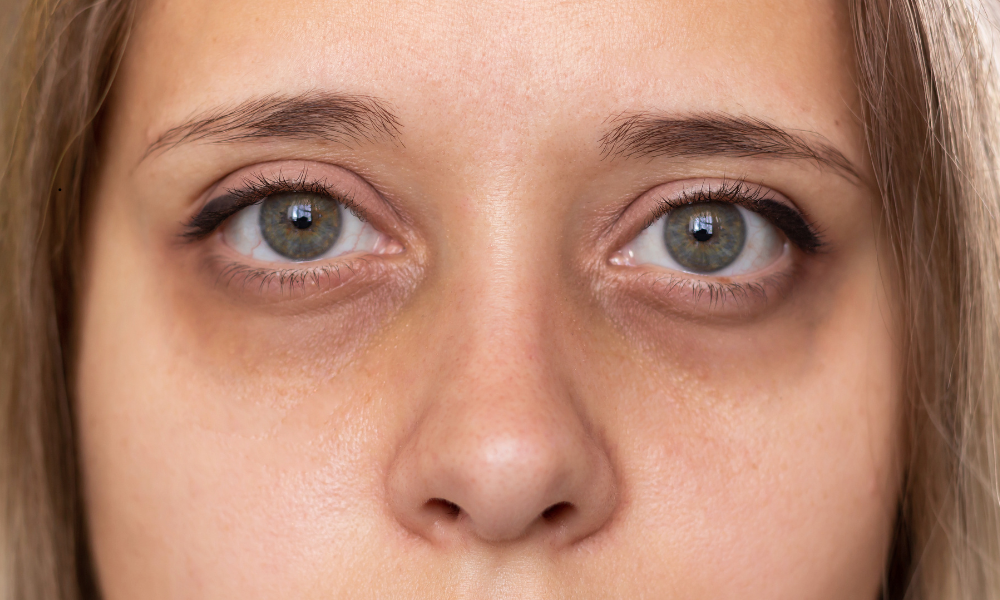
Dark circles under the eyes appear when the thin skin reveals the underlying blood vessels, pigment, or hollows. The most common causes of dark circles under the eyes are genetics, ageing, lack of sleep, allergies, sun exposure and a loss of volume in the under-eye area. In some people, an iron or vitamin deficiency adds to the problem.
The skin around the eyes is some of the thinnest on the whole body, so even small changes show through fast. A late night, a blocked nose or too much screen time can make the area look darker almost overnight.
If you’re also looking for practical ways to improve their appearance, read our guide on how to remove dark circles under eyes permanently for long-term treatment options and realistic expectations.
Key Takeaways
- Dark circles form when thin under-eye skin shows the blood vessels, pigment or hollows below it.
- Genetics, ageing, poor sleep, allergies and sun exposure are the most common causes.
- A deficiency of iron, vitamin B12, vitamin D, or vitamin K can make dark circles worse.
- There are three main types: vascular, pigmentary and structural.
- Treatment works best when it matches the exact cause, so a proper assessment matters.
Causes of Dark Circles Under Eyes
The causes of dark circles under the eyes usually combine several factors rather than just one. Understanding types of dark circles can also help you identify whether your shadows are vascular, pigmentary or structural before choosing the right treatment. Here are the 11 main causes to know:
1. Genetics: Dark circles are genetically determined and can appear at an early age.
2. Age: The skin becomes thin, and fat is lost with time, making dark circles more visible.
3. Sleep: Inadequate sleep slows circulation, thereby causing skin pallor.
4. Allergies: Rubbing and congestion swell the area and darken it.
5. Sun exposure: UV light stimulates melanin production, deepening the skin’s pigmentation.
6. Dehydration: Too little water makes the eyes look sunken and hollow.
7. Iron and vitamin deficiencies: Low iron, B12, D, or K reduce oxygen flow and weaken the skin.
8. Smoking and alcohol: These two habits dry out your skin and reduce blood circulation, which can lead to puffiness.
9. Stress and exhaustion: Constant stress affects your sleep and circulation, leading to dark circles.
10. More screen time: Spending too much time on screens can cause eye strain, leading to eye fatigue and exhaustion.

11. Hormonal changes: Pregnancy, periods, and other shifts can raise pigment around the eyes.
Why Do I Have Dark Circles Under My Eyes?
If you keep wondering, ‘Why do I have dark circles under my eyes?’ the answer usually comes down to your skin type, your daily habits, and your family history. People with deeper-set eyes or naturally darker skin tend to notice them more. Smoking, alcohol and a high-salt diet can also leave the under-eye area puffy and shadowed.
Targeted skin boosters, such as polynucleotides, are designed for the delicate under-eye area, yet the right first step is always to identify the cause of the shadows.
What Deficiency Causes Dark Circles Under Eyes?
Deficiency of which nutrient causes under-eye dark circles is another common question, since food plays an important role. A lack of certain nutrients may reduce blood oxygen levels or damage the skin, thereby causing dark under-eye circles. Nutrients that usually result in dark circles include:
- Iron: when there’s low iron, it may cause anaemia, lower the oxygen supply in the body and give a bluish tint.
- Vitamin B12: its lack has been associated with dark circles many times.
- Vitamin D: the lower the vitamin, the more obvious the circles.
- Vitamin K: responsible for good veins under the eyes.
Vitamin Deficiency and Dark Circles Under Eyes
Iron deficiency and dark circles around the eyes are not uncommon; however, they are generally not the only causes of this phenomenon. An analysis will reveal whether iron or vitamin deficiencies are the cause; once their levels reach the normal range, dark circles tend to disappear, except when caused by genetics.
Sudden Dark Circles Under Eyes: Causes
In many cases, eye shadows may appear suddenly. The following are some of the causes of sudden dark circles under the eyes:
- Not getting enough sleep at night.
- Dehydration after illness, alcohol or hot weather.
- Crying or rubbing the eyes.
- A cold or a blocked nose that causes swelling in the area.
Sudden circles that do not settle or that accompany other symptoms are worth checking with a professional.
Symptoms to Look Out For
The detection of dark circles is quite easy, although some signs will help categorise them based on the following:
• Bluish or purplish tint that tends to become lighter when stretching the skin.
• Brown tint that does not change despite skin stretching.
• Sunken or hollowed-out appearance that forms a shadow (structural).
• Swollen eyes together with dark circles.
• Fatigue even after adequate sleep.
How Dark Circles Develop (How It Works)
Dark circles follow a simple chain. First, the under-eye skin thins with age, genetics or sun damage. Next, the blood vessels and dark pigment below become easier to see. At the same time, fat and collagen fade, which creates a hollow that traps shadow.
Together, these changes make the area look darker, even on a healthy person. That is why one treatment rarely fixes every case; the approach has to match what is happening beneath the surface.
Treatment Options for Dark Circles
Treatment works best when it targets the cause. The following options are:
Polynucleotide
A bioactive injectable skin booster designed for delicate under-eye areas and overall skin texture refinement, which helps refresh and smooth visible signs of fatigue.
Dermal Filler and Injectable
A professional, personalised approach to your facial profile that helps restore volume and natural-looking definition in hollow tear troughs.
Morepheus8
Skin tightening with advanced technology for improved contour and firmness around the face, neck and eyes, a non-surgical solution.
Fractional CO2 Laser (Non-Surgical Blepharoplasty)
An advanced laser that supports skin resurfacing and a firmer, fresher under-eye appearance.
SkinPen Microneedling
Designed to improve the appearance of pigmentation and uneven skin texture by helping the skin renew itself.
Bio-filler
A natural option that helps restore volume and smooth the under-eye area.
A consultation confirms which option, or combination, suits your skin.
How to Reduce Dark Circles at Home
A few simple habits support any in-clinic plan:
- Sleep for seven to nine hours and lift your head when sleeping.
- Drink enough water throughout the day.
- Use sunblock and sunglasses to cover that region.
- Place a cold compress to reduce puffiness.
- Deal with allergy issues to avoid rubbing.
- Eat iron and vitamin-rich foods.
Conclusion
So, what causes dark circles under the eyes? In most cases, it is a mix of thin skin, genetics, ageing, tiredness, allergies and sun exposure, sometimes paired with an iron or vitamin deficiency. The exact shade and shape indicate whether the cause is vascular, pigmentary, or structural.
Because the reasons differ from person to person, the best results come from matching the treatment to the cause. Home care helps, but stubborn or structural circles usually need a professional plan.
If you want to treat dark circles or have a question about under-eye care, you can consult the under-eye specialists at Dr Tanov Aesthetics, who offer options such as Polynucleotides for the delicate under-eye area.
Frequently Asked Questions
Can dark circles go away on their own?
Dark circles caused by fatigue and dehydration often disappear with sufficient rest and more water.
Does drinking water help with dark circles?
Yes. Good hydration keeps the skin plump and can reduce a sunken, shadowed look, though it will not remove pigment or genetic circles.
Can lack of sleep really cause dark circles?
Poor sleep slows circulation and makes the skin look pale, which lets the darker vessels below show through more clearly.
Are dark circles a sign of poor health?
Usually, they are harmless. Now and then, they point to low iron, low vitamins or allergies, so a check is wise if they appear suddenly.
What is the medical name for dark circles?
Doctors call it periorbital hyperpigmentation, which simply means darker skin around the eye area.