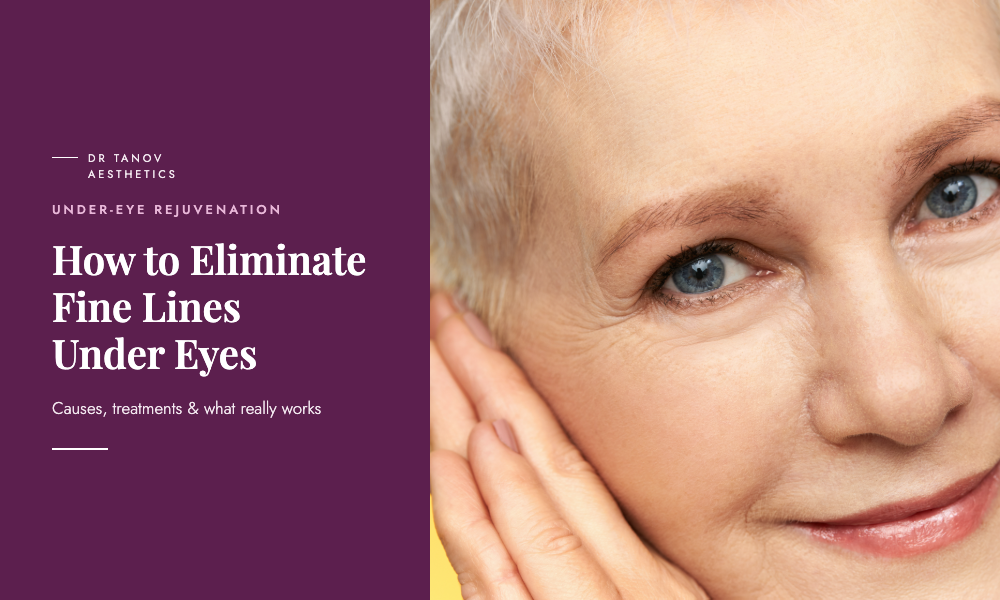
You cannot completely erase fine lines under the eyes, but you can soften them and slow the formation of new ones. The most reliable results come from three things working together: daily sun protection, a simple skincare routine, and professional treatments that rebuild collagen.
The skin beneath your eyes is the thinnest on your face. It ages faster than other parts of your face, making lines more visible sooner. This article explains what causes lines around the eyes, how to treat them at home, and clinic solutions for stubborn cases when creams don’t work. It will also provide prevention tips to help maintain your results for as long as possible.
Key Takeaways
- Collagen deficiency, UV light and eye rubbing are the major causes of fine lines beneath the eyes.
- SPF protection and retinol application reduce fine lines gradually
- CO2 laser rejuvenates the thin under-eye skin by regenerating collagen
- Lower lid blepharoplasty corrects deep lines caused by sagging skin
Can You Eliminate Fine Lines Under the Eyes?
No treatment removes every line forever, because skin keeps ageing. You can make fine lines under the eyes far less visible and delay the formation of new ones. Many people see a clear, lasting improvement with the right combination of care.
Think of it as three steps:
- Protect – stop new damage with daily sun protection
- Support – use simple skincare that helps the skin hold moisture
- Rebuild – choose professional treatments that trigger fresh collagen
Results depend on your age, skin type and how deep the lines already are. A practitioner can examine the area and give you a realistic idea of what each option can achieve.
What Causes Under-Eye Wrinkles?
Under-eye wrinkles develop when the skin loses collagen and elastin, the fibres that keep it firm and springy. Because the skin here is so thin, even small changes show quickly.
Common causes include:
- Natural ageing – collagen production slows from your mid-twenties onwards
- Sun exposure – UV light breaks down collagen faster than anything else
- Repeated movement – squinting and smiling fold the skin thousands of times a day
- Rubbing the eyes – allergies and tiredness lead to rubbing, which stretches thin skin
- Dehydration and smoking – both dry the skin and reduce its supply of nutrients
- Sleep position – pressing your face into the pillow can crease the same spot every night
However, the lines at the corners of the eyes respond differently because muscle action causes them. The crow’s feet solution that addresses these lines is more effective, as explained in detail in the complete crow’s feet guide.
Fine Lines Versus Deep Wrinkles
Fine lines reside in the uppermost layer of the skin and can be corrected by skincare and gentle procedures. Wrinkles and folds are caused by loose skin or fat beneath the skin. These conditions require stronger interventions, including surgical solutions.
How to Get Rid of Under-Eye Wrinkles at Home
If you want to get rid of under-eye wrinkles, start with daily habits. Home care works best on early, shallow lines. It also protects the results of any subsequent professional treatment.

Simple steps that help:
- Use a retinol eye product at night; start twice a week and build up slowly
- Apply a moisturiser with hyaluronic acid to plump the surface of the skin
- Add a vitamin C product in the morning to support collagen and brighten the area
- Stop rubbing your eyes; treat allergies and remove make-up gently
- Sleep on your back where possible and aim for seven to nine hours a night
- Drink enough water and avoid smoking, which speeds up collagen loss
Be patient with this stage. Skincare needs eight to twelve weeks of steady use before you see a change. If the lines stay put after that, professional treatment is the sensible next step.
Under Eye Wrinkle Treatment Options at a Clinic
Professional under-eye wrinkle treatment starts with an assessment, not a menu. A practitioner looks at your skin thickness, the depth of the lines, and whether loose skin or volume change plays a part. Some lines come from muscle movement, and a practitioner can discuss suitable muscle-relaxing treatments with you at a consultation. For fine, crepey lines in the skin itself, the options below do most of the work.
CO2 Laser Treatment for the Eye Area
A CO2 laser treatment uses a narrow beam of light to remove the top layer of dead skin cells. The slight heat beneath the skin triggers new collagen and elastin production. Clinics in London use this approach for non-surgical blepharoplasty, in which the laser tightens the eyelid skin and smooths fine lines without incisions or stitches.
Key points to know:
- A session takes around 30 to 60 minutes, with numbing cream applied first
- Protective metal shields cover the eyes throughout the treatment
- Expect redness and swelling for three to seven days while the skin heals
- The skin condition becomes better in about three months as a result of the regeneration of collagen
- These results usually last up to one or two years, although the ageing process of the skin continues naturally
This treatment is recommended for fine and medium wrinkles and crepey skin. The treatment does not help to cure excessive drooping or large eye bags that would require surgical intervention. Redness and swelling may be side effects.
Skin Boosters and Microneedling
Skin boosters involve injections into the thin skin around the eyes to increase hydration and skin quality after multiple treatments. This treatment uses polynucleotides. There are different kinds of microneedling, including those using radiofrequency technology to stimulate collagen formation.
These options suit early lines and dull, dehydrated skin. Results build gradually and vary from person to person. At a consultation, a practitioner will confirm whether your skin and medical history suit them and explain possible side effects, such as short-term redness, swelling, or bruising.
Lower Eyelid Surgery for Deeper Lines
When loose skin, folds or eye bags cause the problem, surgery gives the most complete change. Lower blepharoplasty repositions or removes excess skin and fat through a fine incision hidden beneath the lash line or within the eyelid.
Expectations:
- The treatment is done under local anaesthesia and with sedation, if required, and takes one to two hours.
- It will take seven to ten days to return to work.
- The swelling and bruising resolve in one to two weeks.
- Results can last many years, although the skin continues to age naturally
Surgery carries risks, including bruising, swelling, dry eyes, and, rarely, changes in eyelid position. An experienced eyelid surgeon will fully discuss these with you before you decide anything.
How to Prevent Fine Lines Around Eyes
Preventing fine lines around eyes costs far less than treating them. The habits below protect both untreated skin and the results of any clinic treatment.
- Make sunscreen non-negotiable – the NHS advises protecting your skin whenever the UV index reaches three or higher.
- Wear sunglasses with UV protection to cut squinting and shield the thin skin.
- Keep the area moisturised morning and night
- Manage allergies early so you rub your eyes less
- Limit alcohol and avoid smoking, which both dry and age the skin
- Review your routine each year – skin changes over time, and so should your care
When Should You See a Specialist?
Seek a specialist when the wrinkles continue to deepen even after three consistent months of home treatment, or when loose skin, swelling, or hollowing is observed along with them. This means the condition has settled deeper than skincare alone can address.
Our vision depends on the organs near our eyes. So, these issues require expertise. An ophthalmic surgeon who operates on the eye area daily will know what treatment should and should not be done.
Conclusion
Fine lines around the eyes can be substantially reduced, even though no procedure eliminates them permanently. Daily sunscreen and retinol can help reduce fine lines caused by ageing. When skincare alone isn’t enough, CO2 laser and skin boosters can rebuild collagen.
Start with the basics, give them time, and get a professional assessment before spending money on stronger options. The right order of steps protects both your skin and your budget.
If fine lines around your eyes concern you, the team at Dr Tanov Eye & Aesthetics can help. Dr Kalin Tanov, a Consultant Ophthalmic Surgeon with a specialist focus on the eye area, provides non-surgical blepharoplasty in London and Newcastle, alongside surgical options where they suit you better.
Frequently Asked Questions
What is the best treatment for wrinkles under the eyes?
Treatment for wrinkles under the eyes varies depending on wrinkle depth, skin type, and skin laxity. If the wrinkles are shallow, then a combination of laser treatment and skincare is usually enough, whereas deep wrinkles may require surgery. We’ll determine this during an examination.
Can fine lines under the eyes go away naturally?
Wrinkles caused by dry skin tend to improve when the skin is well hydrated and protected from the sun. Wrinkles that have formed because of a loss of collagen cannot heal themselves, but you can lessen their appearance.
At what age do fine lines under the eyes appear?
Many people notice their first fine lines in their late twenties or early thirties. Genetics, sun exposure and lifestyle habits decide the exact timing, which is why two people of the same age can look very different.
Does drinking water help fine lines under the eyes?
Hydration supports the skin, and dehydrated skin makes lines look deeper. Water alone will not remove established lines, but it helps the other steps in your routine work better.
Is laser treatment safe for the under-eye area?
CO2 laser treatment around the eyes is well established when performed by a trained practitioner. Protective eye shields, careful settings and a skin assessment beforehand all reduce the risks, which include temporary redness and swelling.
How long do results from under-eye treatments last?
It depends upon the treatment option. Regular skin care is needed; laser treatment effects may last for one or two years, while lower eyelid surgery effects last for many years. The skin’s ageing process is continuous, so good habits will help safeguard your desired outcome.
Do eye creams work on deepunder-eye wrinkles?
Eye creams moisturise the skin and help reduce the appearance of wrinkles, but they cannot tighten loose skin or reconstruct the skin’s underlying structure. For permanent wrinkles, you need a professional procedure.