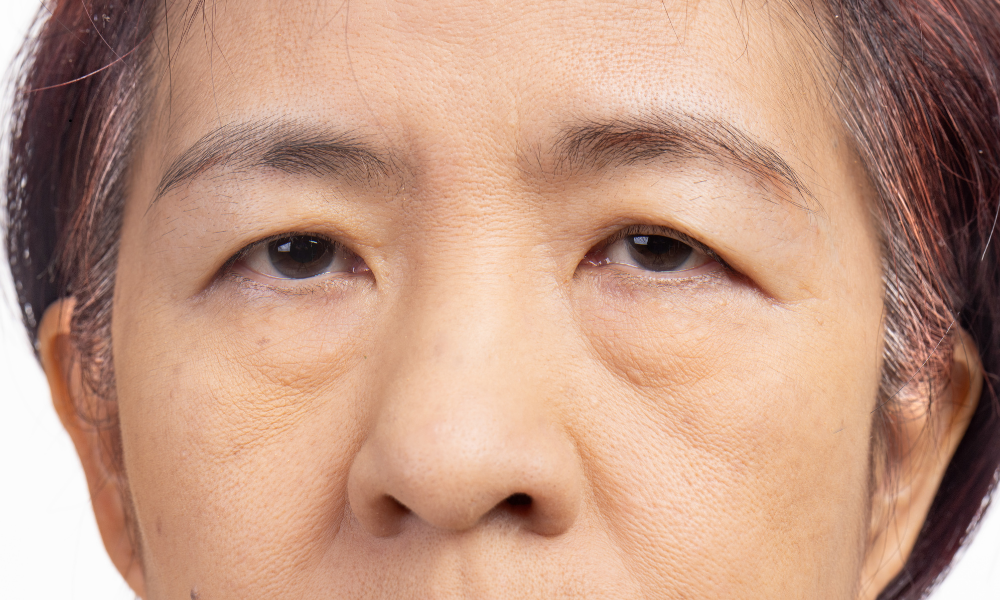
There are ways to fix sagging eyelids without surgery. Whether you have a minor issue with eyelid droopiness or a severe case, some effective treatments and exercises can work wonders for you without surgical intervention.
Droopy eyelids are medically referred to as ptosis, which occurs when the eyelid droops more than usual. Droopy eyelids can be one-sided, bilateral, or only partly covering the pupil. While this is considered a purely aesthetic problem, it can negatively affect your vision and make you look exhausted.
The good news is that surgery is not your only option. From targeted eyelid exercises and lifestyle changes to clinically proven non-surgical eyelid treatments, there is a wide range of options to address this, and we will cover them all in this guide.
What Causes a Droopy Eyelid?
Here are the most common reasons behind droopy eyelids:
Ageing and Muscle Weakness
With ageing, the levator muscle, which raises the upper lid, stretches or becomes weaker. Ptosis due to levator muscle weakness is very common in adults. With ageing, the eyelid skin loses elasticity.
Nerve or Muscle Damage
Certain medical conditions, such as Horner’s syndrome, myasthenia gravis, or a third nerve palsy, can cause the nerves or muscles that control the eyelid to malfunction. Contact Lenses Worn Over Long Periods of Time
Eye Fatigue and Exhaustion
The causes of heavy eyelids include fatigue, dehydration, and overexposure to computer screens.
Allergies or Swelling
Inflammation from allergies, insect bites, or skin conditions around the eye area can make the eyelid appear to droop. Treating the inflammation often resolves the drooping.
Can You Fix a Droopy Eyelid Without Surgery?
Indeed, this is true for many people seeking hooded eye correction without surgery. The techniques for treating droopy eyelids non-surgically have come a long way in recent years. Based on the cause and degree of ptosis, treatments such as Botox injections, RF skin-tightening therapy, and specialised exercises could provide results without requiring any recovery period, serving as an effective, non-invasive, heavy-eyelid fix.
Note that if the condition becomes severe enough to block vision by covering the pupil, you will need surgery.
At-Home Remedies and Lifestyle Adjustments for Droopy Eyelids
Before turning to professional treatments, there are several at-home methods for a droopy eyelift that can help, particularly for mild cases.
Ensure Proper Rest
One of the most ignored factors behind droopy eyelids is sleep deprivation. One should try sleeping seven to nine hours each night. A well-rested body means the muscles surrounding the eyes will work more efficiently.
Ensure Proper Hydration
Dehydration causes swollen eyes, making your eyelids look saggy. Drinking enough water each day helps keep your skin elastic and prevents puffiness around the eyes. One must drink at least 1.5 to 2 litres of water daily.
Cold Compress
Using a chilled compress on the eyes can help make eyelids look less heavy. Similarly, placing cold cucumber slices on the eyes will have a similar effect.

Reduce Salt and Alcohol Intake
Both salt and alcohol can cause fluid retention around the eye area, making the lids appear heavier and puffier. Cutting back on these, especially in the evenings, can reduce morning puffiness.
Natural Ways to Lift Droopy Eyelids
Some people find that certain natural remedies for eyelid drooping can support the skin around the eyes, although results are modest and vary from person to person.
Chamomile Tea Bags
Applying cooled chamomile tea bags to the eyes for 10 minutes helps reduce inflammation and swelling. The anti-inflammatory effects of chamomile can temporarily tighten the skin around the eyelids.
Egg White Mask
Others apply a little egg white, which they whip before applying it to the upper eyelid. It serves as a temporary tightening agent that slightly tightens the skin once it dries.
Aloe Vera Gel
Certain properties of aloe vera promote collagen production and skin elasticity. Applying a small amount of aloe vera gel, away from the eyes, to the eyelid area can gradually help firm your skin.
Retinol Eye Creams
Available OTC eye creams for drooping eyelids contain retinol and peptides, which both help strengthen the skin. It is important that you choose products specifically designed for under-eye use and continue applying them for 8-12 weeks.
Eyelid Exercises to Strengthen the Levator Muscle
Eyelid exercises can improve ptosis by helping to build up the eyelid muscles. It will not cure the disease, but with consistent exercise, you may see some improvement in your droopy eyelid.
The Resistance Exercise
How to do it:
- Place your index fingers gently under your eyebrows.
- Push your eyebrows up slightly, then try to close your eyes against that resistance.
- Hold for five seconds, then release.
- Repeat 10 times, twice a day.
The Eye Patch Exercise
If only one eyelid droops, covering the stronger eye with an eye patch while performing daily activities can encourage the weaker eyelid muscle to work harder and strengthen over time.
Wide-Eye Focus Exercise
How to do it:
- Open your eyes as wide as possible without raising your eyebrows.
- Hold the position for five seconds.
- Relax and repeat 10 times.
Doing this regularly trains the levator scapulae and frontalis (the muscle in your forehead) to maintain a more lifted position naturally.
Non-Surgical Treatments for a Droopy Eyelid(Ptosis)
For those seeking more significant, longer-lasting results, professional non-surgical ptosis treatments offer a clinically proven path forward. These treatments are safe, minimally invasive, and require little to no downtime.
1. Anti-Wrinkle Injections (Brow Lift Effect)
The most commonly used treatment for hooded eyes is the injection of a small amount of botulinum toxin into the lateral brow region. This causes the muscles that draw the brow down to relax, allowing the forehead muscles to elevate the brow.
- Downtime: You experience little to no downtime.
- Results: You see visible results within 7-14 days, and they last about 3-4 months.
- Best for: mild-to-moderate drooping, heavy brows, and tired-looking eyes.
2. Radiofrequency Skin Tightening for Eyelids
The radiofrequency procedure targets energy into the deep layers of the skin on your face. It stimulates the growth of collagen and elastin to lift the eyelids.
- Down Time: Zero
- Benefits: Slow and steady improvement over 2-3 months.
3. Plasma Fibroblast Therapy for Eyelids
Plasma fibroblast therapy uses a small, pen-like device to deliver plasma energy to the skin’s surface, causing microcontractions that physically tighten and shrink loose eyelid skin. It is one of the most commonly performed non-surgical upper eyelid lift options.
- Downtime: 3-7 days of visible healing.
- Results: Results develop over 4-8 weeks and can last 2-3 years.
- Best for: Excess skin on the upper eyelid, mild to moderate drooping.
4. HIFU (High-Intensity Focused Ultrasound)
HIFU uses focused ultrasound energy to target the deeper layers of skin around the eye. By stimulating collagen production at depth, it delivers a lifting and tightening effect that improves the droopy eyelid without any incisions.
- Recovery Time: None to minimal
- Treatment Results: Improvement gradually appears within 2-3 months. It may last 12-18 months.
- Suitable For: Loose skin, moderate brow droop, and complete eyes.
5. Dermal Filler for Brow and Temple Support
As you age, loss of volume in the temples and eyebrow area can cause the eyelids to droop. Dermal fillers in these areas restore volume, lift the brows, and reduce droopy-looking eyes.
- Downtime: Minimal, some bruising possible.
- Results: Immediate, with full effect at 2 weeks; lasts 12-18 months.
- Best for: Volume-related brow descent and indirect eyelid heaviness.
Comparing Non-Surgical Droopy Eyelid Treatments
| Treatment | Downtime | Result Last | Best For | Sessions Needed |
| Anti-Wrinkle Injection | None | 3-4 months | Mild drooping, heavy brows | 1 |
| Radiofrequency | None | Up to 12 + months | Skin laxity, mild ptosis | 3-6 |
| Plasma Fibroblast | 3-7 days | 2-3 years | Excess skin, mild-moderate ptosis | 1-2 |
| HIFU | Minimal | 12-18 months | Moderate brow drop | 1-2 |
| Dermal Filler | Minimal | 12-18 months | Volume-related drooping | 1 |
Makeup Tips to Make Droopy Eyelids Look Lifted
Whilst you are working on longer-term fixes, the right makeup technique can make a significant visual difference to droopy eyelids.
- Apply a soft shimmery shade to the inner corner of your eye to make it look more open.
- Apply darker eyeshadow on the outer corner and above the crease to create depth and lift.
- Curl your lashes before applying mascara; this significantly opens up the eye.
- Avoid heavy liner on the upper lid as it can make the eye appear smaller and more hooded.
- Use a brow lift technique; defined, well-groomed brows create an optical lifting effect.
When Should You See a Professional?
If your droopy eyelid has appeared suddenly or if it is affecting your vision, it is important to seek medical advice promptly. Sudden-onset ptosis can sometimes indicate an underlying neurological condition that requires investigation.
You should see a professional if:
- One or both eyelids have dropped suddenly without an obvious cause.
- Your eyelid is covering part of your pupil and affecting your ability to see clearly.
- You are experiencing double vision, pain, or headaches alongside the drooping.
- At-home remedies have made no difference after several weeks of consistent use.
- You want a faster, more lasting result from a clinically proven non-surgical option.
Conclusion: You Can Fix a Droopy Eyelid Without Surgery
There is a way to fix a sagging eyelid without undergoing surgery. From making basic lifestyle adjustments and doing eyelid exercises to using specific natural treatments to opting for non-surgical eyelid treatment by professionals, everything can be achieved without the need for any operation.
For minor cases, try home remedies and exercises, along with consistent care. For effective, lasting results, opt for anti-wrinkle injections, radiofrequency, or plasma therapy.
The expert practitioners at Dr Tanov provide advanced non-surgical eyelid treatments to help you achieve a brighter, more refreshed look, with treatments precisely tailored to your needs and goals.
Frequently Asked Questions
1. Can a droopy eyelid fix itself naturally?
At times, sure. In cases where the drooping is due to external factors, such as being tired, having allergies, or fluid retention, the drooping eye will correct itself with rest, rehydration, and removal of the cause of the irritation. But when eyelid drooping results from ageing muscles, the condition cannot resolve on its own.
2. Do eyelid exercises actually work?
Yes, eyelid exercises for ptosis can produce modest improvements in mild cases by strengthening the levator and frontalis muscles. They are not a cure for significant drooping, but with consistent practice at least twice daily, many people notice their eyelid sitting slightly higher over time.
3. Is ptosis the same as a droopy eyelid?
Yes, it is the clinical term for a droopy eyelid. It specifically describes a condition in which the upper eyelid margin falls below its normal position, partially or fully covering the eye.
4. Can heavy eyebrows cause a droopy eyelid?
Yes. Brow descent is one of the most common causes of a droopy eyelid. As the brow falls with age, it pushes the upper eyelid skin downwards, creating heaviness even when the eyelid muscle itself is functioning well. Treating the brow position through anti-wrinkle injections or dermal filler can significantly improve the appearance of the eye without touching the eyelid at all.