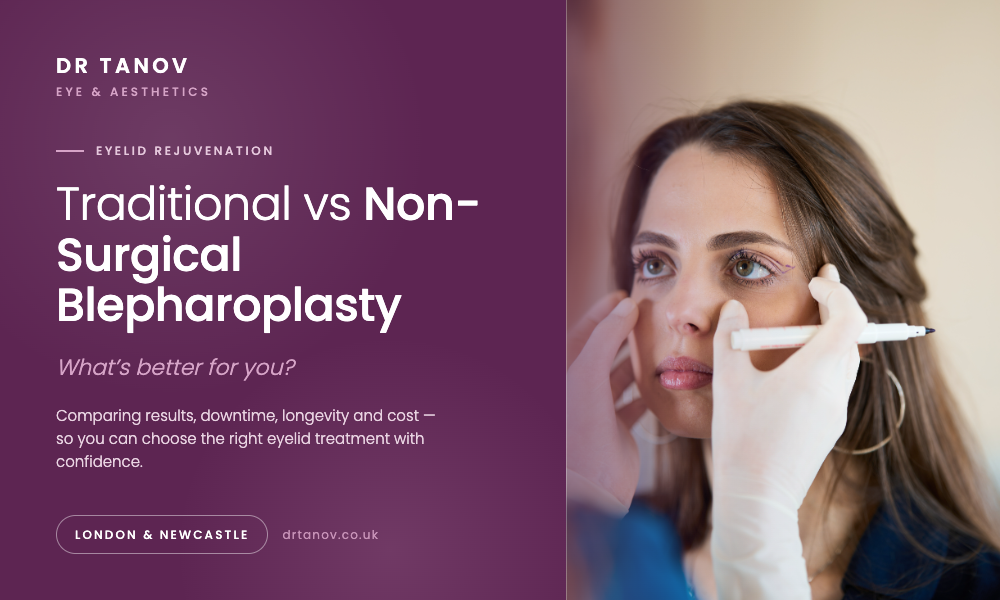
When you compare traditional vs non-surgical blepharoplasty, the main difference lies entirely in how the tissue is treated. Traditional eyelid surgery physically removes excess skin and fat to deliver permanent structural results. On the other hand, non-surgical blepharoplasty uses advanced energy devices, like CO2 lasers or radiofrequency, to shrink loose tissue and tighten the skin without any scalpel cuts.
Both procedures have their own pros and cons. To restore a beautifully refreshed, awake appearance, you must choose the right method for your specific needs. Read on to explore exactly how these two distinct approaches work, compare their recovery times side-by-side, and discover which lift is best suited to your facial anatomy.
Key Takeaways
- Traditional blepharoplasty removes excess skin and fat to create long-lasting eyelid rejuvenation.
- Non-surgical treatments improve mild to moderate concerns without surgery or significant downtime.
- Surgery delivers more dramatic and permanent results than non-surgical alternatives.
- Recovery is longer after surgery, while non-surgical treatments allow a quicker return to daily life.
- The right option depends on your concerns, goals, and tolerance for downtime.
Traditional vs Non-Surgical Blepharoplasty: Key Differences
To truly decide the traditional vs non-surgical blepharoplasty debate, you must consider how they affect your lifestyle and long-term goals.
Scars and Invasiveness
Traditional surgery involves small incisions and fine sutures. However, expert surgeons hide these scars perfectly within the natural folds of the eye. Non-surgical options are completely non-invasive, as they do not split the skin with a scalpel, which means zero risk of surgical scars.
Downtime and Recovery
Traditional eyelid surgery requires extensive preparation. You must take one to two weeks off work to allow significant dark marks and puffiness to subside safely. Non-surgical treatments are ideal for busy schedules, which allows you to return to normal activities in just a few days with only minor redness.
Cost and Maintenance
Traditional surgery has a higher upfront cost due to surgical fees, but the results last for a decade or more, making it a brilliant one-off investment for most. Non-surgical options are more affordable initially, but because the results are temporary, you will need to pay for maintenance treatments every one to two years.
Understand Non-Surgical Blepharoplasty
For those who seek a refreshed look without a scalpel, non-surgical blepharoplasty offers the best alternative. These modern treatments use advanced energy devices to shrink and tighten the skin from the outside in safely.
Fractional CO2 Laser Resurfacing
This is a highly popular non-surgical approach to eyelid lifts. An expert practitioner uses a focused fractional CO2 laser to deliver controlled heat energy deep into the eyelid skin. This safely removes damaged outer layers and forces the body to produce abundant, tight collagen. It visibly lifts thin skin and smooths fine lines without a single cut.
Morpheus 8 Radiofrequency
Morpheus 8 combines tiny, sterile needles with warm radiofrequency energy. It penetrates the delicate under-eye area to shrink loose tissue physically. The intense heat triggers natural collagen production, which smooths out heavy lines and provides a beautiful, firm effect.

Polynucleotides and Injectable Skin Boosters
Alongside lasers and radiofrequency, advanced injectable treatments offer another non-surgical route. Polynucleotides are a highly advanced, bioactive injectable treatment specifically designed for delicate areas like the under-eyes. Rather than just mask lines, this treatment uses natural DNA fractions to stimulate your own cells deeply. It forces the body to regenerate tissue, boost hydration, and drastically improve overall skin texture.
Dermal Fillers
Sometimes, under-eye wrinkles look much worse simply because you have lost volume in the cheek and tear trough area. This loss of fat creates a hollow shadow. Dermal Fillers use hyaluronic acid to restore lost volume instantly, plumping the skin from the inside and reducing fine lines for a bright, rested appearance.
Non-surgical blepharoplasty treatments provide subtle, highly natural improvements that develop gradually over four to six weeks as your body builds new collagen. The results can last between one and two years before a maintenance session is required.
Understanding Traditional Surgical Blepharoplasty
Traditional blepharoplasty is intended to correct moderate-to-severe eyelid folds. This is a surgical procedure that provides permanent structural changes to the eye area. Here’s what it looks like:
The Initial Consultation
Before you undergo any surgical procedure, a thorough assessment is crucial. An expert surgeon examines facial anatomy, checks vision, and discusses your ultimate goals. They will evaluate the position of your fat pads to ensure the plan is tailored to your specific face.
The Procedure
An expert ophthalmic surgeon makes highly precise, hidden cuts along the natural crease of the upper eyelid or just inside the lower lash line. The excess skin, muscle, and fat are carefully removed or repositioned, and the cuts are then closed with fine stitches. The scars in the natural folds of the eye become invisible once healed.
Expected Results
The results of traditional surgery are incredibly transformative. By physically removing the tissue that causes heaviness and puffiness, the eyes look immediately brighter, wider, and much more alert.
Longevity
Because the excess tissue is permanently removed, the lift is incredibly long-lasting. Patients typically enjoy their refreshed, youthful appearance for 10 to 15 years, and removing the lower fat pads often provides permanent improvement.
Recovery Time
Surgery requires a dedicated recovery period. Patients typically experience noticeable puffiness and dark marks for one to two weeks. The stitches are usually removed after seven days, with most people returning to normal activities after 10 to 14 days.
Quick Comparison: Traditional vs Non-Surgical Blepharoplasty
| Feature | Traditional Surgical Blepharoplasty | Non-Surgical Blepharoplasty |
| Pain | Painful, requiring minor surgical cuts and stitches. | Non-invasive; uses laser or heat energy. |
| Results | Dramatic, highly noticeable structural changes. | Subtle, natural, firm and smooth effects. |
| Longevity | Permanent fat removal. Skin results last 10 to 15 years. | Temporary. Tight skin lasts 1 to 2 years. |
| Recovery Time | 1-2 weeks for dark marks to settle. | 1 to 7 days of mild redness or peels. |
| Ideal Candidate | People with severe skin sagging, heavy ‘hooded’ eyelids, and prominent under-eye bags | People with mild to moderate skin laxity, fine lines, and preventative eye rejuvenation |
| Cost | Has higher upfront costs, but is often a one-off investment | More affordable. Requires investments for maintenance |
| Side Affects | Potential for visible scarring, dry eyes, infection, temporary blurred vision, or asymmetry | Fewer risks overall, but potential for burns, mild peeling, or skin irregularities if performed incorrectly |
Which Eyelid Treatment is Right for You?
Selecting the correct procedure depends entirely on your age and your personal preferences regarding recovery.
When to Choose Traditional Surgery
You should opt for a surgical blepharoplasty if you
- Have severe, heavy skin folds that touch your eyelashes or block your vision.
- Have prominent fat bags under your eyes that creams cannot hide.
- Need dramatic, permanent change.
When to Choose Non-Surgical Options
A non-surgical laser or radiofrequency treatment is best for
- Mild to moderate skin looseness and early signs of fine lines.
- Those who want a subtle, preventative refresh, not structural change
- Completely avoiding anaesthesia and scalpels
- Need short recovery periods
How to Prepare for Your Eyelid Treatment?
Whether you choose a surgical route or a non-surgical method, proper preparation ensures the best possible results.
- Avoid Sun Exposure: You must protect your skin from harmful ultraviolet rays in the weeks before your procedure. Wear a broad-spectrum sunscreen daily.
- Pause Certain Medications: Your doctor will likely advise you to stop blood-thinners and supplements, as these can increase the risk of heavy, dark marks after the procedure.
- Stop Tobacco Use: You must cease tobacco use at least four weeks before your surgery. Tobacco smoke severely restricts blood flow, which delays normal tissue repair and increases the risk of severe complications.
- Hydrate Your Body: Drink plenty of water every day in the week before your treatment. Well-hydrated skin responds much better to laser heat energy and recovers much faster.
- Plan Your Rest: If you opt for traditional surgery, arrange for someone to drive you home and prepare a comfortable recovery space with extra pillows to keep your head elevated.
Conclusion
When you decide between traditional vs non-surgical blepharoplasty, you must look at the severity of your loose skin. A non-surgical CO2 laser is a brilliant, low-downtime option for gently tightening mild loose skin and smoothing fine lines. However, if you suffer from heavy, vision-obstructive folds or large under-eye fat bags, traditional surgery remains the absolute best solution to remove the excess tissue for a permanent result physically.
The highly trained specialists at Dr Tanov Aesthetics provide expert, tailored blepharoplasty treatments to help lift heavy eyelids and restore a beautifully bright, rested appearance to your face.
Frequently Asked Questions
Is non-surgical blepharoplasty as good as surgery?
Non-surgical options are excellent for tightening mild skin, but they cannot physically remove prominent fat pads or correct severe drooping like traditional surgery can.
How long can a non-surgical eye lift last?
The firm results from a non-surgical laser or radiofrequency treatment typically last between one and two years before maintenance sessions are required.
Which is better, upper or lower blepharoplasty?
Neither is better; they treat different issues. Upper blepharoplasty fixes heavy skin above the eye, whilst lower blepharoplasty smooths out puffy fat bags below the eye.
Is blepharoplasty a painful procedure?
No. The procedure involves minimal discomfort. It is performed under local anaesthetic, and post-surgery soreness is easily managed with simple over-the-counter pain relief.
Does traditional eyelid surgery leave visible scars?
Expert surgeons place the small cuts directly into the natural creases of the eyelid, which means the scars become virtually invisible once fully healed.