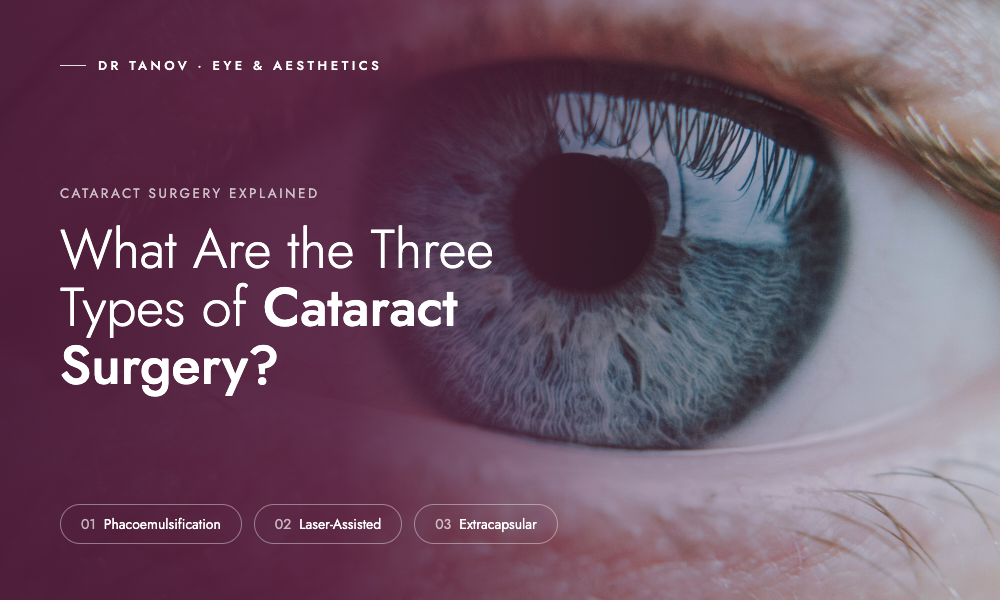
The three main types of cataract surgery are phacoemulsification, laser-assisted cataract surgery, and extracapsular cataract extraction. Each method removes the eye’s cloudy lens and replaces it with a clear artificial lens. They differ in the size of the cut, the tools the surgeon uses, and who each one suits. Phacoemulsification is the modern standard for most people. Laser-assisted surgery adds computer-guided precision to some steps. Extracapsular extraction is used for very dense or advanced cataracts. A surgeon selects the appropriate approach after a thorough eye exam.
This guide explains how each option works, the lens choices you have, and what recovery looks like, so you feel informed before speaking with a specialist.
Key Takeaways
- Phacoemulsification is the most common method and uses gentle sound waves to break up the cloudy lens.
- Laser-assisted surgery uses a computer-guided laser to perform certain steps of the operation.
- Extracapsular extraction is well-suited to very hard or advanced cataracts that require a larger opening.
- All three methods replace the cloudy lens with an artificial intraocular lens.
- Your choice of lens affects whether you still need glasses afterwards.
- Cataract surgery is one of the safest and most common operations, but every procedure carries some risk.
Understanding the Main Types of Cataract Surgery
Surgeons use three main methods to remove a cataract. All three replace the cloudy lens with a clear artificial one. The table below provides a quick overview, and the sections that follow explain each method in more detail.
| Type of Cataract Surgery | How It Works | Best Suited To |
| Phacoemulsification (Phaco) | Ultrasound breaks up the cloudy lens through a tiny incision; an artificial lens replaces it. | Most patients small incision and quick recovery. |
| Laser-Assisted (FLACS) | A laser makes the incisions and softens the lens before the surgeon fits the new lens. | Cases needing extra precision, such as astigmatism. |
| Extracapsular Extraction (ECCE) | A larger incision removes the lens in one piece; stitches are usually needed. | Very dense or advanced cataracts. |
What Are the Three Types of Cataract Surgery?
Surgeons offer several cataract surgery options, and the right one depends on your eye health and the density of your cataract. Below are the three main types you are most likely to hear about.
1. Phacoemulsification (Small-Incision Surgery)
Phacoemulsification is currently the most widely used procedure. In this procedure, the doctor makes an incision on the surface of the eye, which may be very tiny (2-3 millimetres). Then a small probe releases sound waves (ultrasound) to fragment the lens. The fragments are sucked out through a small suction device.
Once the lens is out, the surgeon places a clear artificial lens in its place. The cut is so small that it usually heals on its own without stitches. Recovery tends to be quick, which is why most people have this type of surgery.
Key points:
- Very small cut that often needs no stitches
- Fast healing and a quick return to daily life
- Suits most people with a typical cataract
2. Laser-Assisted Cataract Surgery
Laser cataract surgery, also called laser-assisted or femtosecond laser surgery, is a newer approach. Instead of the surgeon performing every step by hand, a computer-guided laser performs some of the key steps. The laser can make the cut, open the front of the lens capsule, and soften the cataract before removal.
The surgeon still removes the lens and replaces it, as in phacoemulsification. Supporters say the laser adds precision and consistency. Studies show that the final results are often similar to those of standard surgery, so your surgeon will advise whether it offers any real benefit for your eyes.
Key points:

- A computer-guided laser handles some of the manual steps
- May add precision for certain eyes
- Often works alongside the same lens-removal method
3. Extracapsular Cataract Extraction (ECCE)
Extracapsular cataract extraction is an older but still useful method. Surgeons mainly use it for very hard or advanced cataracts that are too dense for ultrasound to break up. Instead of breaking the lens into pieces, the surgeon removes the cloudy centre as a single piece.
This needs a larger cut than phacoemulsification, so it usually needs stitches and a slightly longer recovery. The surgeon leaves the back part of the lens capsule in place to hold the new artificial lens.
Key points:
- Used for dense or advanced cataracts
- Removes the cloudy lens in one piece
- Larger cut, stitches, and a longer healing time
You may also read about intracapsular cataract extraction. This very old method removes the entire lens and its capsule. Surgeons rarely use it now, and only in unusual cases, because the modern methods above are safer and gentler.
How Cataract Surgery Works: Step by Step
Whichever method you have, the operation follows a similar path. Here is what usually happens on the day.
- Eye check and lens choice. Your surgeon checks your eyes, takes careful measurements, and helps you pick the right replacement lens.
- Numbing drops. You receive local anaesthetic drops, so you stay awake but feel no pain.
- Lens removal. The surgeon removes the cloudy lens using one of the methods above.
- Lens implant. A clear artificial lens is placed in the natural lens capsule.
- Same-day recovery. You rest for a short while, then go home the same day with simple aftercare.
When Is Surgery Needed?
A cataract does not always need surgery straight away. Doctors usually recommend treatment once your vision starts to affect your daily life. A specialist can confirm the cause during an eye assessment and check how far the cataract has developed.
Signs it may be time to act include:
- Cloudy, misty, or blurred vision
- Trouble driving, especially at night
- Glare or haloes around bright lights
- Colours that look faded or yellow
- Needing brighter light to read
- Frequent changes to your glasses prescription
Intraocular Lens Types: Choosing Your Replacement Lens
The artificial lens used in surgery is called an intraocular lens, or IOL. There are several types of intraocular lenses, and your choice affects how well you see afterwards and whether you still need glasses.
- Monofocal implants provide vision at only one distance, typically long-distance. Reading glasses will probably be needed.
- Toric implants are used for patients who have astigmatism, an abnormal curvature of the eyeball.
- Multifocal and trifocal lenses aim to provide clear vision at near, intermediate, and distance, which can reduce the need for glasses.
- Extended depth of focus (EDOF) lenses give a smooth range of vision that works well for screens and driving.
The NHS usually provides a standard monofocal lens. Private care often gives access to a wider choice of premium lenses. Your surgeon will explain which option fits your eyes, budget, and lifestyle.
Cataract Surgery Options: How to Choose the Right Method
No single method suits everyone. Your surgeon considers several factors before advising you on the right cataract surgery options.
- How dense or advanced the cataract is
- The overall health of your eye
- Any other eye conditions, such as glaucoma
- Your daily activities and vision goals
- Whether you want to reduce your need for glasses
A full assessment is the only way to know which method and lens suit you. This is why an in-person consultation matters so much.
Are There Risks with Cataract Surgery?
Cataract surgery is one of the most common and successful operations. Even so, like any procedure, it carries some risk. Serious problems are uncommon, and most people recover well.
Common effects, which are usually mild, include:
- Dry, gritty, or watery eyes for a few days
- Mild redness or bruising around the eye
- Blurred vision that settles as the eye heals
Less common risks include:
- Infection or swelling inside the eye
- Raised pressure inside the eye
- Clouding of the lens capsule later, which a quick laser treatment can clear
- Retinal problems in rare cases, which may need further care
Your surgeon will explain the risks for your own eyes and answer your questions before you agree to any treatment.
Conclusion
The three main types of cataract surgery are phacoemulsification, laser-assisted surgery, and extracapsular cataract extraction. Each one removes the cloudy lens and replaces it with a clear artificial lens, but the right method depends on your eyes and the strength of your cataract. Your lens choice then shapes how much you rely on glasses afterwards.
The right next step is a proper eye assessment with a specialist who can guide you honestly. If you would like expert advice, you can explore consultant-led cataract surgery in London with Dr Tanov, where the same surgeon looks after you from your first consultation through to your aftercare.
Frequently Asked Questions
What are the three types of cataract surgery?
The three main types are phacoemulsification, laser-assisted cataract surgery, and extracapsular cataract extraction. Each removes the cloudy lens and replaces it with a clear artificial one. The methods differ in the size of the cut and the tools used.
Which type of cataract surgery is best?
There is no single best option for everyone. Phacoemulsification suits most people, while denser cataracts may need extracapsular extraction. Your surgeon advises the right method after checking your eyes.
Is laser cataract surgery better than standard surgery?
Laser-assisted surgery can add precision to some steps. Studies show that the final results are often similar to those of standard surgery. Your surgeon will tell you whether it offers any real benefit for your eyes.
How long does cataract surgery take?
The operation itself usually takes about 30 to 45 minutes for each eye. It is a day-case procedure, so you go home the same day. You will spend a little extra time on checks and preparation.
Does cataract surgery hurt?
Numbing drops keep the eye comfortable, so you should not feel pain during surgery. You stay awake throughout. Your eye may feel gritty or dry for a few days afterwards, which soon settles.
How long is recovery after cataract surgery?
Many people notice clearer vision within a few days. Most return to their normal routine within one to two weeks. You will use eye drops for a short while as your surgeon advises.
Will I still need glasses after cataract surgery?
This really depends on the type of lens that you select. If you use a monofocal lens, you will likely still need reading glasses. Trifocals, multifocals, and EDOF lenses aim to minimise the need for glasses across all possible ranges.