
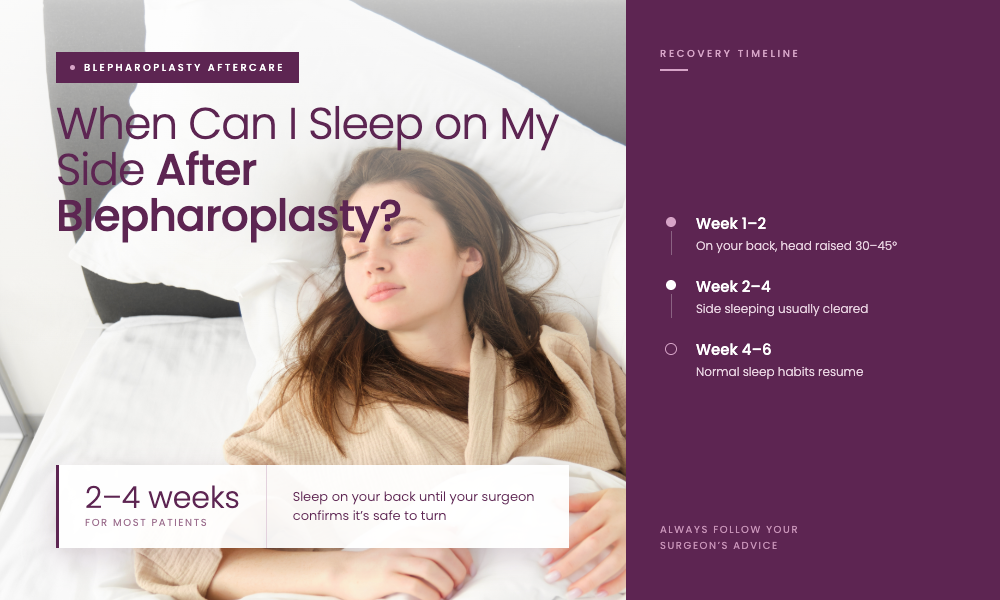
Most surgeons agree that sleeping on your side is possible about 2-4 weeks after blepharoplasty, once the swelling has subsided and the sutures have healed. During the first 1 to 2 weeks, you need to sleep on your back with your head elevated. The most common patient question at the follow-up visit is when to sleep on their side after blepharoplasty. In fact, there is no clear answer to the above question since everyone heals differently.
Some patients can sleep on their sides in two weeks, while for some it takes up to six weeks. Your surgeon determines the appropriate time during the follow-up visits. This guide will show you the full recovery period and the correct way to arrange your bed. Here, you can also find useful advice on blepharoplasty recovery to help you sleep better.
Key Takeaways
- Lie down in the supine position, with your head elevated for the first one to two weeks.
- After two to four weeks, most surgeons approve lying in the lateral position.
- An elevated head is used to prevent swelling and protect the sutures.
- Extra pillows on each side of your head help prevent you from rolling over at night.
- Always follow your surgeon’s advice, because healing time varies from person to person.
When Can You Sleep on Your Side After Blepharoplasty?
Most patients can lie down on their sides about two to four weeks after the procedure. Some doctors prefer to be on the safe side and recommend that patients wait about six weeks before sleeping on their sides again. This decision is based on how well the eyes heal and on the type of blepharoplasty performed.
The first two weeks are critical. The most intensive swelling takes place during the first two to three days after the surgery, and the incisions are still relatively new. Lying on your side during that period is not a good idea, as your face will be pressed against the pillow, which can hinder healing and increase swelling.
- This is the typical timeline that surgeons suggest:
- First Week: Sleeping only on the back position with elevated head.
- Second Week: Same as before but with decreasing swelling and bruises.
- Second to Fourth Weeks: Patients are usually allowed to lie on their sides.
- Fourth to Sixth Weeks: Normal sleep habits are resumed.
Your surgeon checks your healing at each follow-up visit and tells you when it is safe to switch. Never guess the date on your own.
Why Sleeping After Eyelid Surgery Needs Extra Care
The skin around your eyes is the thinnest on your body. How you sleep after eyelid surgery shapes how evenly the area heals. Your position either supports recovery or works against it.
Sleeping on your side too soon can cause:

- Uneven swelling. Fluid gathers on the side pressed into the pillow, so one eye may look puffier than the other.
- Pressure on the incisions. Even a soft pillow can press on fresh wounds and stretch healing skin.
- Rubbing during the night. You move without knowing it while asleep, and friction can irritate the stitches.
- Slower healing. Extra swelling and pressure stretch the recovery period out longer than it needs to be.
Careful habits in these early weeks also protect how the eyes finally look. You can see the difference good healing makes in these upper blepharoplasty before-and-after results.
How to Sleep After Blepharoplasty
Learning how to sleep after blepharoplasty takes a little planning, but the routine is simple once you set it up. The goal is to keep pressure off your eyelids and help fluid drain away from your face.
The Right Sleeping Position After Eyelid Surgery
The recommended sleeping position after eyelid surgery is flat on your back, in the centre of the bed. Place a pillow on each side of your head to stop yourself rolling over during the night. Some patients also use a U-shaped travel pillow, because it holds the neck steady and keeps the face pointing upwards.
Avoid stomach sleeping completely during recovery. It presses your face straight into the pillow, putting the most pressure on the healing area.
How to Sleep Elevated After Blepharoplasty
Raise your head to roughly a 30- to 45-degree angle. Most surgeons advise you to sleep elevated after blepharoplasty for at least the first one to two weeks. You can set this up with:
- A wedge pillow that can support your upper back, neck, and head.
- Two to three solid pillows carefully placed on top of each other.
- An adjustable bed, in case you have one.
Sleeping while lying in an elevated position makes it easier for gravity to help move fluid from your eyes.
Learn More: How long does non-surgical blepharoplasty last
Blepharoplasty Recovery Tips for Better Rest
These easy routines will make your nights easier and ensure proper recovery:
- Have your bed ready by the day of surgery. Prepare your wedge or pile of pillows beforehand so everything is ready once you get back home.
- Apply cold compresses as instructed. Cold compresses in the daytime help reduce swelling faster.
- Don’t touch your eyes with your hands. Don’t rub the area, even if it itches during recovery.
- Don’t do vigorous exercises for a week or two after the procedure. Exercise increases blood pressure and leads to swelling.
- Follow your full aftercare plan. Good blepharoplasty aftercare includes cleaning the area gently and using any drops or ointments your surgeon prescribes.
- Rest with your head raised during the day too. Short breaks in a propped-up position support healing between nights.
Signs You Should Contact Your Surgeon
Some swelling, discolouration, and tightness can be expected within the first couple of weeks. Some symptoms require immediate action, though. You should contact your surgeon if you observe:
- An increase in pain rather than a decrease within a few days
- A sudden and pronounced swelling of the eyes
- Bleeding from the incision mark
- Any changes to your vision
- Any signs of an infection such as increased heat and redness, pus discharge
This will help keep things under control from the start.
Conclusion
So, when can one resume sleeping on their side after blepharoplasty surgery? The general response time for most people is two to four weeks, when the doctor is satisfied that all the cuts have healed and the swelling has subsided. Before this period, one should avoid sleeping on one’s side and instead sleep on one’s back, with the head elevated upon pillows to keep it there.
The specialists at Dr Tanov Eye & Aesthetics provide expert blepharoplasty treatment in London and Newcastle, with personalised aftercare guidance from Consultant Ophthalmic Surgeon Dr Kalin Tanov at every stage of recovery.
Frequently Asked Questions
When can I sleep normally after eyelid surgery?
Most people can resume sleeping normally after four to six weeks of eyelid surgery. At this point, the cuts would have healed, and pressure will not pose a challenge. The doctor determines your exact period.
What happens if I accidentally sleep on my side after blepharoplasty?
One short episode is unlikely to cause lasting harm. Return to your back as soon as you notice, and place pillows beside you to stop it happening again. Call your surgeon if you see new swelling, pain, or bleeding afterwards.
How long should I sleep with my head raised after surgery?
Many surgeons recommend keeping your head elevated for one to two weeks. Some people prefer to maintain elevation for a few more weeks after that as well, since it is comfortable and reduces swelling.
Can I sleep on my side one week after blepharoplasty?
It is usually too early. At one week, the incisions are still fresh, and the swelling is settling. Wait until your surgeon confirms it is safe, which for most people falls between two and four weeks.
Which pillow works well after eyelid surgery?
A wedge pillow gives steady support at the right angle. If you do not have one, stack two or three firm pillows instead. A U-shaped travel pillow also helps by keeping your head from turning at night.
Does my sleeping position really affect my results?
Yes, especially in the first two weeks. Pressure on the healing area can cause uneven swelling and irritate the incisions, which may affect how the eyelids settle.