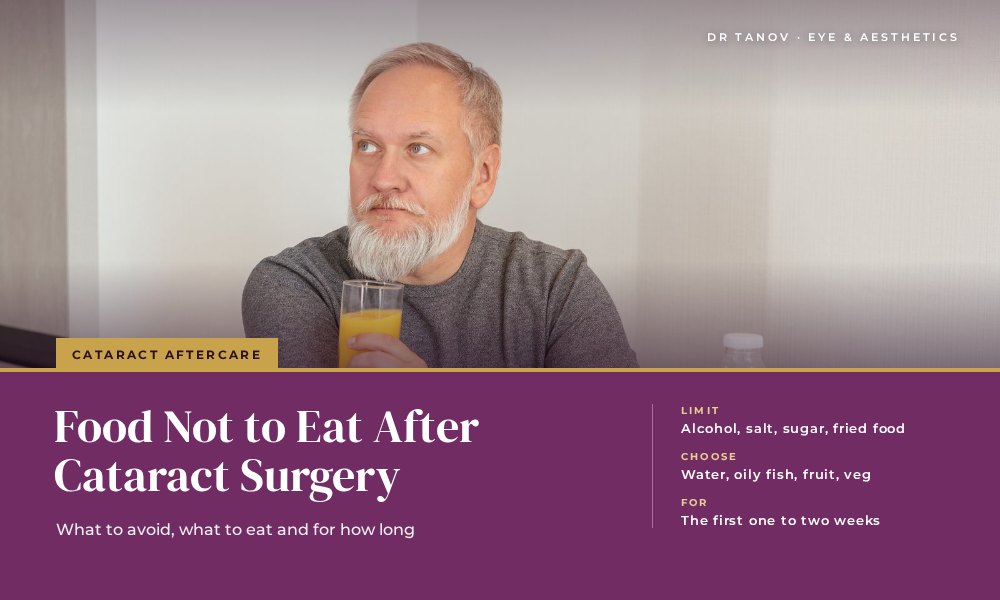
Are there any foods you shouldn’t eat after cataract surgery? There is no strict diet after the operation. In fact, the NHS says you can eat and drink as normal when you have a local anaesthetic. However, a few foods and drinks can slow your recovery or make your eye feel dry and sore. So it is wise to cut back on a few of them for the first one to two weeks. These include alcohol, salty food, sugary snacks, greasy meals and strong coffee.
The good news is that these changes are small and short. Most people go back to their usual meals within a few weeks. This guide explains the foods to avoid after cataract surgery and why they matter. It also shows what to eat after cataract surgery instead, and how long to keep it up. Finally, it covers what you can eat before the operation.
Key Takeaways
- There is no strict diet after cataract surgery, and most people can eat as normal straight away
- Avoid alcohol for at least 24 to 48 hours, then keep it light for the first few weeks
- Limit salty, sugary, fried and heavily processed food while your eye heals
- Choose water, oily fish, fruit, vegetables and high fibre food to help your recovery
- If you have diabetes, steady blood sugar matters more than usual after surgery
Is There a Special Diet After Cataract Surgery?
No, there is no special diet. Cataract surgery is usually done under a local anaesthetic, so you stay awake and do not need to fast. That is why the NHS says you can eat and drink as normal before the operation. Most people can also have a light meal soon after they get home.
However, food still plays a part in your recovery. Your surgeon makes a tiny cut at the front of your eye. Then they remove the cloudy lens and place a clear artificial lens inside. That small cut needs about a week to seal. In that time, your body needs water, protein and vitamins to repair the tissue.
If you had sedation or a general anaesthetic, the advice is a little different. Start with a light meal and plenty of fluids, and avoid heavy, greasy food for the rest of the day. Some NHS eye units give this exact advice on their discharge leaflets.
So the aim is not a strict plan. Instead, it is a short spell of simple, sensible choices.
Foods to Avoid After Cataract Surgery
Below are the foods not to eat after cataract surgery, or at least to cut back on. None of these foods will damage your new lens. In fact, the lens is artificial, so food cannot harm it. The concern is how these foods affect your fluid levels, blood pressure, blood sugar and comfort.
Salty and Processed Food
Crisps, ready meals, salted nuts, bacon, ham and takeaways are often high in salt. Too much salt makes your body hold on to water and can raise your blood pressure. It also makes you thirsty. On top of that, processed food is low in the vitamins your body uses for repair. So choose fresh, home-cooked meals when you can, and go easy on added salt.
Sugary Food and Drinks
Cakes, biscuits, sweets and fizzy drinks cause quick spikes in blood sugar. A diet high in added sugar can also add to inflammation in the body. That’s why it makes sense to keep sweet treats small while you heal.
This matters even more if you have diabetes. Studies show that poorly controlled blood sugar raises the risk of fluid at the back of the eye after surgery. This is called macular oedema, and it can blur your vision. So keep your blood sugar steady and take your diabetes medicine as usual. Your GP or diabetes team can help.
Fried and Greasy Food
Chips, fried chicken, pastries and other greasy food are hard on the stomach, especially on the day of surgery. They are also high in fats linked to inflammation. Some NHS eye units advise a light diet and no heavy, greasy food after sedation. For the first few days, grill, bake or steam your food rather than fry it.
Alcohol
Alcohol is the main drink to avoid. It dries out your body, and dry eyes feel gritty and sore. It can also mix poorly with sedation or pain relief tablets. Most surgeons advise no alcohol for at least 24 to 48 hours. After that, keep it light for the first few weeks.

Too Much Caffeine
You do not need to give up your daily cup of coffee or tea. However, large amounts of caffeine can cause a small, short rise in the pressure inside your eye. In one trial, a high dose of caffeine raised eye pressure, while a normal cup made little difference. So keep to one or two cups a day while your eye heals. Decaf, herbal tea and water are good swaps. Avoid energy drinks, since they are high in both caffeine and sugar.
Low Fibre Food
White bread, white rice, pastries and lots of red meat or cheese can leave you constipated. This is more likely if you are less active than usual after surgery. It matters because you should not strain hard on the toilet after eye surgery. When you strain, the pressure in your head and eyes rises for a moment. So add fibre with fruit, vegetables, oats, beans and wholemeal bread, and drink plenty of water. If you still struggle, ask your pharmacist about a gentle laxative.
Very Spicy Food
Very hot chillies can make your eyes and nose stream. Then you may want to wipe or rub your eye, which you must avoid while it heals. Chilli on your fingers can also burn if it gets near the eye. So keep spice mild for the first few days.
Not Sure What to Eat While You Recover? Dr Tanov gives every cataract patient a clear, personalised aftercare plan, from eye drops to everyday meals.
Foods to Limit and Better Swaps
This quick table sums up what not to eat after cataract surgery and what to choose instead.
| Food or drink to limit | Why it matters | A better swap |
|---|---|---|
| Alcohol | Dries you out and can mix with medicines | Water, squash or alcohol free drinks |
| Crisps, ready meals, bacon | High salt raises blood pressure and thirst | Unsalted nuts, fresh home-cooked meals |
| Cakes, biscuits, fizzy drinks | Quick blood sugar spikes, worse with diabetes | Fresh fruit, plain yoghurt |
| Chips and fried food | Heavy to digest and linked to inflammation | Grilled, baked or steamed food |
| Strong coffee, energy drinks | Large doses briefly raise eye pressure | Decaf coffee, herbal tea |
| White bread, white rice | Low fibre can cause constipation | Wholemeal bread, oats, brown rice |
| Hot chillies | Watery eyes tempt you to rub them | Mild herbs and spices |
What to Eat After Cataract Surgery
So, what to eat after cataract surgery? Aim for simple, balanced meals with plenty of colour. The best food after cataract surgery gives your body what it needs to repair the eye and keep it comfortable.
Water and Other Fluids
Water helps keep your tears healthy and your eye surface moist. Dry eye is common for a few weeks after surgery, so sip water through the day. Herbal tea, milk and diluted squash count too.
Oily Fish and Omega-3
Salmon, mackerel, sardines and trout are rich in omega-3 fats. In a small trial, people who took omega-3 for dry eye after cataract surgery had better tear results. If you don’t eat fish, try walnuts, chia seeds, or flaxseed. Ask your surgeon before you start any supplement.
Fruit and Vegetables
Oranges, berries, kiwi and peppers are high in vitamin C, which your body uses to repair tissue. Spinach, kale and broccoli contain lutein, a natural pigment linked to long-term eye health. They also add fibre, which helps prevent constipation.
Protein
Your body uses protein to repair the small cut in your eye. Eggs, chicken, fish, beans, lentils, tofu and Greek yoghurt are all good choices. Soft foods like eggs and soup are easy if you feel tired on the first day.
Whole Grains
Oats, brown rice and wholemeal bread release energy slowly. They also keep you regular, so you do not need to strain on the toilet.
How Long Should You Avoid These Foods?
Most of these limits are short. Here is a simple timeline:
- The day of surgery: Have a light meal, drink plenty of water and avoid alcohol.
- The first 48 hours: No alcohol. Keep meals light, simple and low in salt.
- The first week: Keep salt, sugar, fried food and caffeine low. Eat fibre and drink water to avoid constipation.
- Weeks two to four: Slowly return to your usual diet. Keep alcohol light, since you still use your eye drops for about four weeks.
- After four to six weeks: Your eye has usually settled, so you can eat as normal.
Everyone heals at their own pace. So always follow your surgeon’s advice.
Have Diabetes or High Blood Pressure? Your health affects your recovery. Speak with a Consultant Ophthalmic Surgeon at Dr Tanov Eye & Aesthetics for advice that fits you.
Can You Eat Before Cataract Surgery?
Patients often ask, ‘Can you eat before cataract surgery?’ In most cases, yes. The answer depends on your anaesthetic:
- Local anaesthetic: This is the most common type. The NHS says you can eat and drink as normal before the operation.
- Sedation or general anaesthetic: You will need to stop food and drink for a set time before surgery. Your clinic will tell you exactly when.
Also avoid alcohol for 24 to 48 hours before surgery. Take your usual medicines unless your surgeon says otherwise. A light breakfast and a glass of water are a good start to the day.
Tips to Support Your Recovery After Cataract Surgery
Food is only one part of your recovery. These simple habits protect your eye too:
- Use your eye drops exactly as your surgeon prescribes
- Wear your eye shield at night for the first week
- Do not rub or press on your eye
- Do not lift heavy bags or bend over for the first week
- Keep soap and shampoo out of your eye when you shower and wash your hair
- Wear sunglasses outside if light feels too bright
- Rest well, since your body does much of its repair at night
When to Speak to Your Eye Surgeon
Mild grittiness, watery eyes and blurred vision are common in the first few days. However, some signs need a quick check. Contact your surgeon straight away, or call NHS 111, if you notice:
- Pain that gets worse, not better
- Vision that suddenly gets worse after it improved
- More redness or a sticky discharge
- New flashes of light or a shower of floaters
- A dark shadow or curtain across your vision
These problems are rare. Still, fast action protects your sight.
Conclusion
So, what foods should you avoid after cataract surgery? There is no strict list, and you do not need a special diet. However, it pays to cut back on a few foods for the first one to two weeks. These are alcohol, salty and processed foods, sugary snacks, fried food, strong caffeine and very hot spices. Instead, choose water, oily fish, fruit, vegetables, protein, and whole grains.
These small swaps keep your eye comfortable and help your body heal. Above all, follow your surgeon’s advice.
If you plan to have surgery or want expert aftercare, speak with Dr Kalin Tanov, a Consultant Ophthalmic Surgeon. Dr Tanov Eye & Aesthetics offers private cataract surgery in London and Newcastle.
Frequently Asked Questions
Can I drink coffee after cataract surgery?
Yes. One or two cups a day is fine for most people. Very large amounts of caffeine can temporarily raise eye pressure. So swap extra cups for decaf or herbal tea in the first week.
Can I eat eggs after cataract surgery?
Yes. Eggs are a great choice. They are soft, easy to cook and rich in protein and lutein. Both support your recovery and your long-term eye health.
Can you eat spicy food after cataract surgery?
Mild spice is fine. However, very hot chillies can make your eyes water and tempt you to rub them. So keep spice low for the first few days.
Can I eat straight after cataract surgery?
Yes. Most people can have a light meal as soon as they feel well. If you had sedation, start with a small, light meal and drink plenty of fluids.
Do I need a special diet if I have diabetes?
You do not need a new diet, but steady blood sugar matters more than usual. High blood sugar is linked to fluid buildup at the back of the eye after surgery. Take your medicine as normal and follow the advice of your diabetes team.
Can food damage my new lens?
No. The new lens is artificial, so food and drink cannot harm it. Your food choices only affect how the tissue around the lens heals and how comfortable your eye feels.
Can a healthy diet help prevent cataracts?
A balanced diet supports your overall eye health. Some studies link diets rich in fruit and vegetables with a lower cataract risk. However, age is the main cause, and surgery is the only way to remove a cataract.