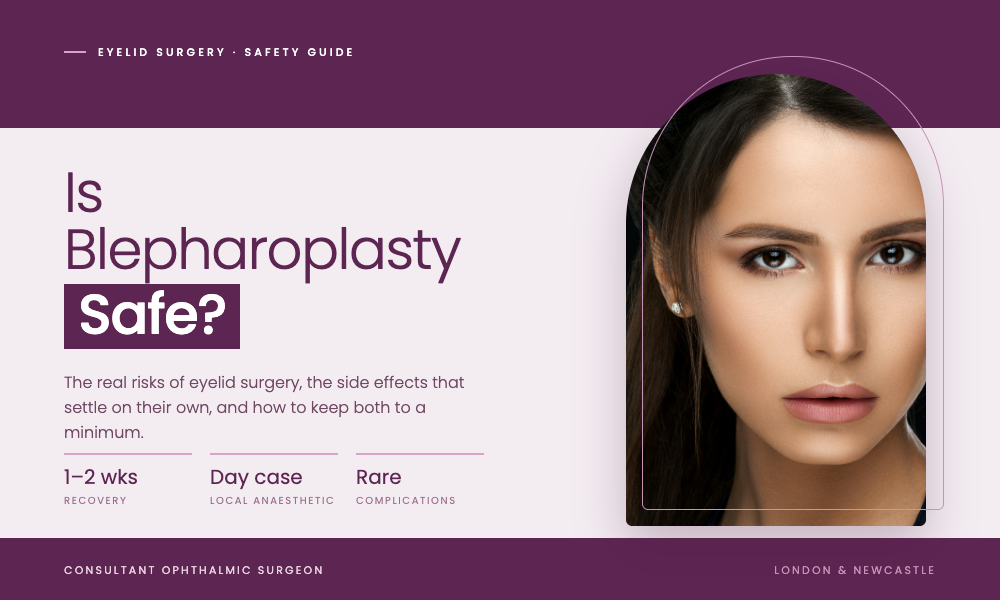
Yes, but for most healthy individuals. Blepharoplasty surgery is a safe procedure when performed by a certified professional. However, as with all surgeries, there is some risk involved. Some common side effects, such as swelling and bruising, disappear after one or two weeks.
The surgery, referred to as Eyelid Plastic Surgery and Blepharoplasty, involves the removal or alteration of extra tissue from around the eye area. It is now one of the most requested cosmetic procedures in the UK. How safe it is for you depends on your general health, your surgeon’s training and how closely you follow aftercare advice. This guide explains the risks, side effects, and checks that make surgery safer.
Key Takeaways
- The most common side effects are bruising, swelling, and dry eyes, which usually improve within a few weeks.
- Very few severe complications arise from blepharoplasty, but since surgery is risky, health checkups are important.
- One or two weeks after blepharoplasty, people can return to their normal routines.
Is Blepharoplasty Safe?
Blepharoplasty has a good safety record, provided an experienced surgeon performs it. This part of your face is delicate, but the operation itself is fast and outpatient.
The question of whether eyelid surgery is safe has no single answer for everyone, because safety rests on three things:
- Your health. Good general health and an honest medical history reduce risk
- Your surgeon. Training, experience and specialist knowledge of the eye area make the biggest difference
- Your aftercare. Following instructions after surgery protects healing.
- UK regulation adds another layer of protection. Every doctor who performs surgery must hold General Medical Council (GMC) registration, and clinics that carry out surgical procedures follow strict national standards. The sections below cover each safety factor in plain language.
What Is Blepharoplasty?
A blepharoplasty is an operation performed for removal or repositioning of excess tissue from around the eyes. It may be done on either upper or lower eyelids, or on both simultaneously.
- Upper blepharoplasty treats hooded or drooping upper eyelids. When loose skin hangs over the lash line, it can block part of your vision and make the eyes feel heavy. An upper blepharoplasty in London or Newcastle removes this excess skin through a small cut hidden in the natural eyelid crease.
- Lower blepharoplasty targets puffiness and loose skin under the eyes. A lower blepharoplasty removes or repositions the fat that causes under-eye bags.
Surgery is not the only route for milder concerns. If you are weighing up traditional vs non-surgical blepharoplasty, a consultation with an eye specialist helps confirm which option suits your eyelids.
What Happens During Blepharoplasty?
Knowing the steps of the operation makes the safety picture clearer.
- Assessment. The surgeon examines your eyelids, checks your vision and reviews your medical history.
- Anaesthetic. Most eyelid surgery takes place under local anaesthetic, sometimes with light sedation. You stay awake, but the area stays numb.
- The procedure. In this surgery, the surgeon will make a very small cut in the eyelid along the natural crease, remove excess tissue, and close up the area using very fine sutures.
- Going home. Upper eyelid surgery usually takes under an hour, and most patients leave the clinic the same day.
Because the cuts sit inside natural skin folds, the scars usually fade until they are hard to spot.

Common Blepharoplasty Side Effects
Every patient notices some blepharoplasty side effects in the first days after surgery. These are a normal part of healing, not a sign that something has gone wrong. Expect:
- Bruising and swelling around the eyes, which peak in the first few days
- Dry, gritty or watery eyes for a short period
- Mild soreness or a feeling of tightness in the lids
- Slightly blurred vision for a day or two, often from the protective ointment
- Small pink scars along the crease line that soften over the following months
Your surgeon may prescribe drops or an ointment to keep the area comfortable while it heals. Cold compresses and sleeping with your head raised also help the swelling settle faster.
What Are the Risks of Blepharoplasty?
Understanding the real blepharoplasty risks helps you make a calm, informed decision. Surgeons split them into two groups: common problems that usually resolve, and rare problems that need prompt care.
Common Blepharoplasty Complications
Most blepharoplasty complications in this group are mild and treatable:
- Infection. Redness, warmth or discharge around the wound. Prompt treatment usually clears it
- Visible scarring. Scars normally fade well, but some people heal with thicker marks
- Asymmetry. Small differences between the two eyelids can appear as swelling settles
- Difficulty closing the eyes. Usually temporary while the lids adjust
- Small cysts along the stitch line, which the clinic can remove easily
Rare but Serious Complications
Serious problems after eyelid surgery are rare, but you should know they exist:
- Bleeding behind the eye, which causes sudden pain, pressure and vision changes and needs emergency care.
- Lasting changes to vision. In very rare cases, severe bleeding or injury can cause lasting damage to sight.
- The lower lid pulling away from the eye (ectropion) after lower eyelid surgery, which sometimes needs a further procedure.
- Revision surgery, if healing does not go as planned.
Who Faces Higher Eyelid Surgery Risks?
Certain health factors increase the risks of eyelid surgery, which is why a proper consultation always comes first. Tell your surgeon if any of these apply to you:
- Smoking, which slows healing, so most surgeons ask you to stop for several weeks before and after surgery
- Dry eye problems, which surgery can make worse for a time
- Thyroid eye conditions, which affect the tissues around the eyes
- Medications that act as blood thinners, which your prescribing physician will have to assess before your surgery
- Eye surgery or eye disease such as glaucoma
None of these conditions alone automatically disqualifies you from having your surgery. They just mean that your surgeon takes a different approach.
How to Make Eyelid Surgery Safer
The question of whether blepharoplasty is safe matters, but the better question is how to make it safer for you. A few simple checks lower the risk a great deal:
- Check your surgeon on the GMC register. Every doctor practising in the UK appears there.
- Choose specialist experience. An ophthalmic or oculoplastic surgeon works on the eye area every day and understands how the eyelids protect the eye itself.
- Check the clinic. In England, surgical procedures should take place in a setting registered with the Care Quality Commission (CQC).
- Ask about risks at your consultation. A good surgeon raises them without being asked, so treat silence on risks as a warning sign.
- Look at genuine results. Reviewing real upper blepharoplasty before-and-after photos from the surgeon’s own patients helps set realistic expectations.
- Follow pre-surgery advice. Stop smoking, share your full medication list and attend every follow-up appointment.
Blepharoplasty Recovery: What to Expect
Good aftercare is a safety step in its own right. A smooth blepharoplasty recovery usually follows this pattern:
- Day 1-2: rest with an elevated head and apply a cold compress to reduce swelling
- Day 3-7: bruising reaches its peak, starts fading, and the stitches that do not dissolve are removed after five to seven days at the clinic
- Week 2: majority of patients feel fit enough to go back to their work and regular activities
- Week 3-6: do not engage in vigorous workouts, swimming, or eye make-up until the surgeon clears you for that
- A few months later: swelling gets completely settled, and scarring gets softer and fades away
In the meantime, ensure that the area stays clean, wear sunglasses when outside, and use the prescribed medications as advised by your clinic. Regular visits to the clinic help your surgeon catch even minor problems and fix them.
Conclusion
Is Blepharoplasty Safe? In general, it is safe for most healthy adults. The surgery is safe when performed by a highly skilled surgeon because severe complications are rare, whereas bruising and swelling, common post-operative complications, fade away within a few weeks. A safer route goes via a proper consultation, an experienced surgeon, and proper follow-up.
Dr Kalin Tanov, a Consultant Ophthalmic Surgeon with more than 15 years of experience, provides upper blepharoplasty in London and Newcastle. Every consultation includes a comprehensive eye health assessment and a clear discussion of the benefits and risks so that patients can make a fully informed choice.
Frequently Asked Questions
Is eyelid surgery safe for older adults?
Yes. Surgeons assess overall health rather than age, and many patients have blepharoplasty in their 50s, 60s and 70s.
Is blepharoplasty a major surgery?
No. Surgeons class it as a relatively minor procedure under local anaesthetic, and most patients go home the same day.
What happens if a blepharoplasty goes wrong?
Most cases of blepharoplasty gone wrong involve treatable issues such as asymmetry, dry eyes or slow healing. Contact your surgeon early, because a prompt review solves most problems.
How painful is blepharoplasty?
Most patients feel discomfort rather than pain. The local anaesthetic numbs the area during surgery, and simple pain relief manages the tight, sore feeling afterwards.
How long do blepharoplasty results last?
The effects of this procedure are rather durable, and many patients can benefit from the results for about 10 years or more. The ageing process is not stopped, yet the eyelids do not look like they did before.
Can blepharoplasty affect your eyesight?
Serious harm to eyesight is very rare. Expect mild blurred vision for a day or two, and upper eyelid surgery can even improve your field of vision when heavy skin blocks it.