Blepharoplasty gone wrong photos usually show one of six problems: uneven eyelids, hollow eyes, lids that will not close, a lower lid pulled down, or scars outside the natural crease. Each has a known cause, and the right treatment can improve most of them.
Most eyelid surgery heals well. Swelling, bruising and a tight feeling are normal in the first few weeks and settle on their own. A true complication is different. It does not settle, or it gets worse.
This guide explains what those images show and how to tell a complication from normal healing. It also covers why eyelid surgery can go wrong and how surgeons can correct a poor result.
Key Takeaways
- Uneven lids, hollowing and lids that will not close are the main warning signs.
- Swelling and bruising in the first two to three weeks are normal, not a complication
- Removing too much skin or fat often leads to poor results and is hard to reverse.
- Revision surgery can improve many problems, usually six to twelve months after the first operation.
What Blepharoplasty Gone Wrong
Blepharoplasty removes excess skin, fat or muscle from the upper or lower eyelids. When it goes wrong, the problem is almost always visible. That is why so many people look at photos of blepharoplasty gone wrong. Some look before they book surgery. Others look after their result doesn’t seem right.
A bad blepharoplasty tends to show in one of these ways:
- Uneven eyelids: one eye looks more open than the other, or the creases sit at different heights
- Hollow, sunken eyes: the surgeon removed too much fat, so the eye area looks older rather than fresher
- A gap when the eyes close: the upper lid cannot meet the lower lid, and the eye stays partly open during sleep
- A pulled-down lower lid: white shows below the coloured part of the eye, or the lid edge turns outwards
- A rounded outer corner: the eye loses its almond shape and looks round or ‘surprised’
- Scars that stand out: thick, raised or red lines, or scars that sit above or below the natural crease
For comparison, a well-planned result looks rested rather than changed. The upper blepharoplasty before-and-after guide shows what a balanced outcome looks like once healing is complete.
One warning about images found online. Many show normal early healing at one or two weeks, when the lids are still swollen and bruised. Others are years old, edited, or not from eyelid surgery at all. UK advertising rules require clinics to publish only genuine, unedited images of their own patients. Treat any other photos of blepharoplasty gone wrong as prompts to ask questions, not as proof of what to expect.
Eyelid Surgery Gone Wrong or Normal Healing? How to Tell the Difference
The most common worry in the first month is not a complication at all. Healing often looks worse than expected. Knowing what eyelid surgery gone wrong looks like, and what normal recovery looks like, takes away a lot of the guesswork.
Normal healing follows a fairly predictable path:
- Weeks 1 to 2: swelling, bruising, tight or numb lids, watery or dry eyes, and a small gap on closing at night. Stitches usually come out at five to seven days
- Weeks 3 to 6: bruising fades, swelling drops, and the scars look pink. The lids may still feel tight
- Months 3 to 6: the final shape settles, scars soften, and small differences between the two sides often even out
- Month 12: most blepharoplasty scars have faded to a fine pale line
The blepharoplasty recovery timeline explains each stage in more detail. The guide to how eyelid scars heal covers scar care week by week.
The table below compares normal healing with signs of a problem.
| What you notice | Normal healing | Possible complication |
| Swelling and bruising | Improves week by week | Sudden new swelling on one side, or swelling that keeps growing |
| Lids not closing fully | Slight gap at night in weeks 1 to 2 | Gap still present after six to eight weeks, with dry, gritty eyes |
| Uneven lids | Small differences that improve by month 3 | Clear difference that remains after six months |
| Scars | Pink, slightly raised, softening over months | Thick, raised, webbed or outside the crease at six months or later |
| Lower lid position | Mild tightness that eases | White showing under the iris, lid turning outwards, constant watering |
| Pain | Mild, eases within days | Severe or sudden pain, especially with any change in vision |
Sudden severe pain, rapidly increasing swelling, a bulging eye or any loss of vision need same-day medical attention. Contact the operating clinic or call NHS 111. These signs are rare, but they can indicate bleeding behind the eye, which requires urgent treatment. The NHS guide to eyelid surgery lists the side effects to expect and the problems to report. The guide to whether blepharoplasty is safe also covers general risks.

Blepharoplasty Complications
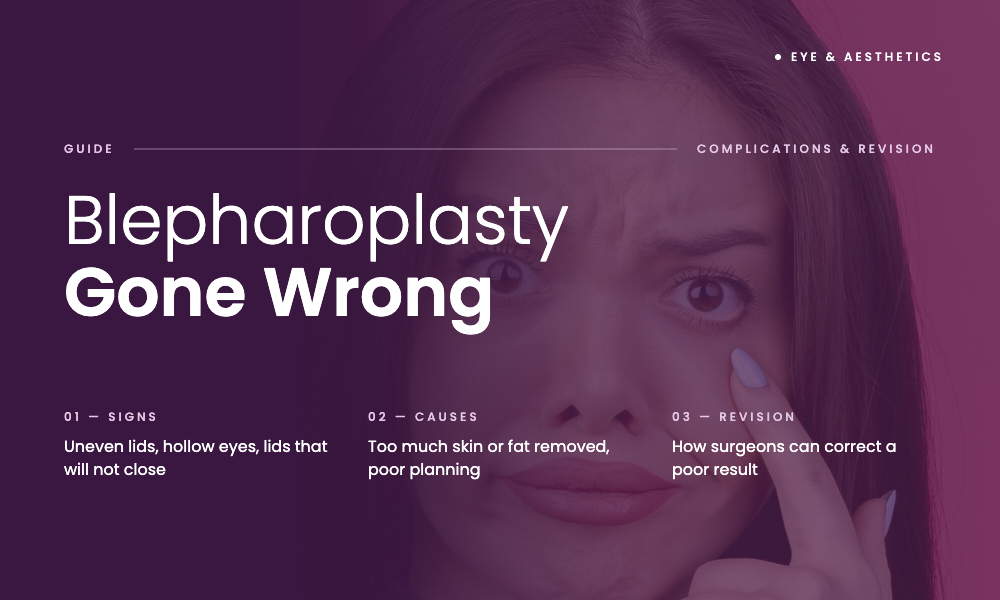
I want you to provide me the image for the section on how wrong blepharoplasty looks, so that I can put it in the section after the key takeaways. I’m going to add a photo as well.
Some blepharoplasty complications are minor and settle with time. Others change the shape or the function of the eyelid and need treatment. The problems below are the ones that most often appear in blepharoplasty-gone-wrong photos.
Too Much Skin Removed: When the Eyes Will Not Close
The most searched problem is the too much skin removed blepharoplasty result. The surgeon removes more upper-lid skin than the eye can spare, and the lid can no longer close fully. Doctors call this lagophthalmos.
Signs include:
- A visible gap between the lids when the eyes are gently closed
- Dry, gritty or burning eyes, worse first thing in the morning
- Watering, redness or blurred vision caused by a dry eye surface
- A wide-eyed or ‘startled’ look
Some space is normal during the first few weeks but tends to resolve as the swelling subsides. If the space persists for more than two months, it is abnormal. Removed skin cannot be put back, so surgeons add skin with a graft or lengthen the lid surgically. In less severe cases, lubrication and waiting may be enough.
Hollow Eyes from Too Much Fat Removed
Fat pads give the eyelids their soft, full shape. Remove too much, and the upper lid looks sunken, or the lower lid shows a deep groove above the cheek. This is a common cause of an ‘overdone’ or older look after surgery.
Modern techniques tend to retain or reposition fat rather than remove it. If hollowing has already occurred, fat transfer or dermal filler can restore volume in suitable cases.
Lower Lid Pulled Down: Retraction and Ectropion
The lower lid is easy to pull out of position. If the surgeon removes too much skin, or scar tissue tightens as it heals, the lid drops. Two problems can follow:
- Lid retraction: the lid sits too low and white shows below the iris
- Ectropion: the lid edge turns outwards, away from the eye
Both cause watering, redness and dryness, and both change the shape of the eye. Correction may involve tightening the outer corner of the lid, adding a small graft to support the lid, or both. This complication most often requires a surgeon who specialises in eyelid repair.
Uneven Eyelids and Creases
Perfect symmetry does not exist before surgery, and it does not exist after it. Small differences are normal. A clear difference that remains after six months, such as one crease sitting much higher, or one eye looking more open, is a complication.
Sometimes the cause is a weak lid-lifting muscle, known as ptosis, that existed before surgery and went untreated. In that case, a ptosis repair, rather than a second blepharoplasty, is the right answer.
Blepharoplasty Scars That Do Not Settle
Eyelid skin heals well, and most scars fade within a year. A problem scar looks different:
- Thick, raised or lumpy at six months or beyond
- Still red or dark after the first few months
- A web of skin at the inner corner of the eye
- A line that sits outside the natural crease and shows when the eyes are open
Scar care, silicone gel,l and time improve many of these. Scars that sit in the wrong place or pull on the lid may need surgical revision.
Other Problems Seen After Eyelid Surgery
- Persistent dry eye, especially in people who had dry eyes before surgery
- Small white cysts, called milia, along the scar line, which are simple to remove
- Numbness or altered feeling in the lids, which usually improves
- Double or blurred vision, which is normally short-lived but needs checking if it lasts
- Infection, which is rare and needs prompt treatment
- Bleeding behind the eye, which is very rare but can threaten sight and needs emergency care
| Considering Revision Surgery for a Previous Eyelid Result?Consultant-led assessment of what was done and what can changeClear advice on surgical and non-surgical optionsOne surgeon from consultation through to aftercare, in London and Newcastle[ Request a Call Back ] |
Why Does a Botched Blepharoplasty Happen?
A botched blepharoplasty rarely comes from a single mistake. It usually comes from a plan that did not fit the person’s anatomy, or from removing more tissue than the lids could spare. The main causes are:
- Taking too much skin or fat. Aggressive removal can yield dramatic early results but leave a hollow or exposed eye later. Conservative surgery is safer because a small second procedure is far easier than putting tissue back in.
- Treating the wrong problem. Heavy upper lids can come from low brows or a weak lid muscle, not just extra skin. Comparing a brow lift vs blepharoplasty helps you tell them apart.
- Missing risk factors before surgery. Dry eye, thyroid eye disease, a loose lower lid or previous eye surgery all raise the risk of complications. A careful assessment of who is suitable for eyelid surgery identifies these.
- Poor incision placement. A scar that sits outside the crease, or too close to the lash line, will show.
- Complications of healing. The surgery may cause infection, bleeding, or excessive scar tissue.
- Aftercare that goes wrong. Rubbing the eyes, smoking, heavy exercise too early and missed follow-up appointments all affect the result.
Experience with the eyelids matters. The eyelid protects the eye, so surgeons with specialist training in eye and eyelid surgery plan around both function and appearance.
Revision Blepharoplasty: How Surgeons Correct a Poor Result
Revision blepharoplasty is surgery to correct or improve the result of a previous eyelid operation. It is more complex than first-time surgery, because scar tissue has changed the lids and there is less spare skin to work with. When planned well, it can still address most of the problems described above.
When Is the Right Time for Revision?
Most surgeons wait six to twelve months after the first operation. By then the swelling has gone, the scars have softened, and the true result is clear. Operating earlier means working on tissue that is still changing.
There are exceptions. If the eye cannot close and the surface is drying out, earlier treatment protects the eye. The same applies if the lower lid has turned outwards, leaving the eye exposed.
What the Assessment Involves
- Photos from before the first surgery, to see what the lids looked like originally
- The operation notes, where available, to see what the surgeon removed
- A full eye examination, including the tear film, lid closure and lid tightness
- Measurement of lid height, crease position and any brow drooping
- A frank discussion of what revision can and cannot change
Revision Techniques by Problem
- Lids that will not close: a skin graft, often taken from behind the ear, or a procedure to lengthen the upper lid
- Sunken Eyes: Fat transfer or fillers for added volume
- Retracted Lower Eyelid or Ectropion: Tightening of the outer corner of eyelids and placement of a spacer graft
- Asymmetrical Eyelids: Adjustment of crease or removal of small excess skin; repair of lifting muscle
- Unfavourable Scars: Scar revision to realign, release or flatten the scar
Non-Surgical Options Come First
A second surgery is not always the answer for unsatisfactory results. For a small gap on closing, lubricating drops by day and ointment at night can protect the eye.
Taping the lower lid at night can support a lid that sits slightly low. A small amount of filler can soften hollowing. A specialist will usually try these first where they are likely to work.
Realistic Expectations
Revision can improve a result, but it cannot fully restore the eyelids to how they were before surgery. Removed skin cannot be replaced, and each operation can add scar tissue. An ideal revision leaves you with a natural-looking, comfortable eye that blinks properly.
How to Reduce the Risk of Eyelid Surgery Going Wrong
Most of the problems seen in photos of blepharoplasty gone wrong are avoidable with careful planning. Before surgery:
- Check that the surgeon is on the GMC register and ask about their training in eyelid surgery. Ophthalmic and oculoplastic surgeons operate on this area every day
- Check that the clinic or hospital holds Care Quality Commission registration
- Ask how the clinic handles complications and what follow-up the price includes
- Have a full assessment, including a dry eye check, a lower lid tightness test and a look at brow position
- Share your full medical history, including thyroid problems, contact lens use and any blood-thinning medicines
- Ask to see the surgeon’s own unedited before-and-after images of similar cases
- Plan aftercare and follow-up close to home, especially if you travel for surgery
- Follow the aftercare instructions and attend every check-up
Conclusion
Blepharoplasty gone wrong photos show five main problems: uneven lids, hollow eyes, lids that will not close, a low lower lid, and thick or misplaced scars. Most come from removing too much tissue or from a plan that didn’t match the person’s anatomy. Normal healing looks messy for a few weeks and then settles. A true complication does not.
If something still feels or looks wrong after three to six months, an evaluation by an eyelid specialist is the logical next step. The right revision can fix many of these issues and protect the eye.
If you have concerns about a previous eyelid operation, or want to discuss revision blepharoplasty, consult Dr Kalin Tanov, Consultant Ophthalmic Surgeon at Dr Tanov Eye & Aesthetics. He provides upper and lower blepharoplasty in London and in Newcastle as well.
FAQs
What does a bad blepharoplasty look like?
A bad blepharoplasty shows the same problems seen in photos of botched blepharoplasties. Look for uneven lids, hollow eyes, a lid that will not close, a low or outward-turning lower lid, or a thick scar outside the crease. If any of these remain after six months, seek a specialist opinion.
How do you know if your blepharoplasty went wrong?
Normal healing improves week by week. A complication remains the same or worsens. Persistent dryness, a gap when closing the eyes, white showing under the iris or clear asymmetry after three months are signs to act on. Sudden pain, swelling or vision loss need same-day care.
How long do blepharoplasty scars take to fade?
Most scars are pink for the first two to three months and fade to a fine pale line by twelve months. A scar that is still thick, raised or red after six months, or that sits outside the natural crease, may need treatment.
How long should you wait before revision blepharoplasty?
Usually six to twelve months, so that swelling has gone and the scars have matured. Earlier treatment may be necessary if the eye cannot close, or if the lower lid has turned outward, leaving the eye exposed.
Is it normal for eyes to look uneven after blepharoplasty?
Yes, in the early months. Swelling settles at a different pace on each side, and no face is perfectly symmetrical. A clear difference that remains after six months isn’t normal, and a surgeon can usually correct it.